
If you've been searching for an eating plan that's both delicious and scientifically proven to boost your health, look no further than the Mediterranean diet. Unlike fad diets that come and go, this eating pattern has been studied extensively for over 50 years, with researchers consistently finding remarkable benefits for everything from heart health to brain function. The Mediterranean Diet, traditionally associated with healthy longevity, is increasingly recognized for its preventative and therapeutic benefits across many NCDs.
But what exactly makes the Mediterranean diet so special? And more importantly, how can you realistically incorporate its principles into your daily life? Let's dive into the latest scientific evidence and explore practical ways to embrace this time-tested approach to eating.
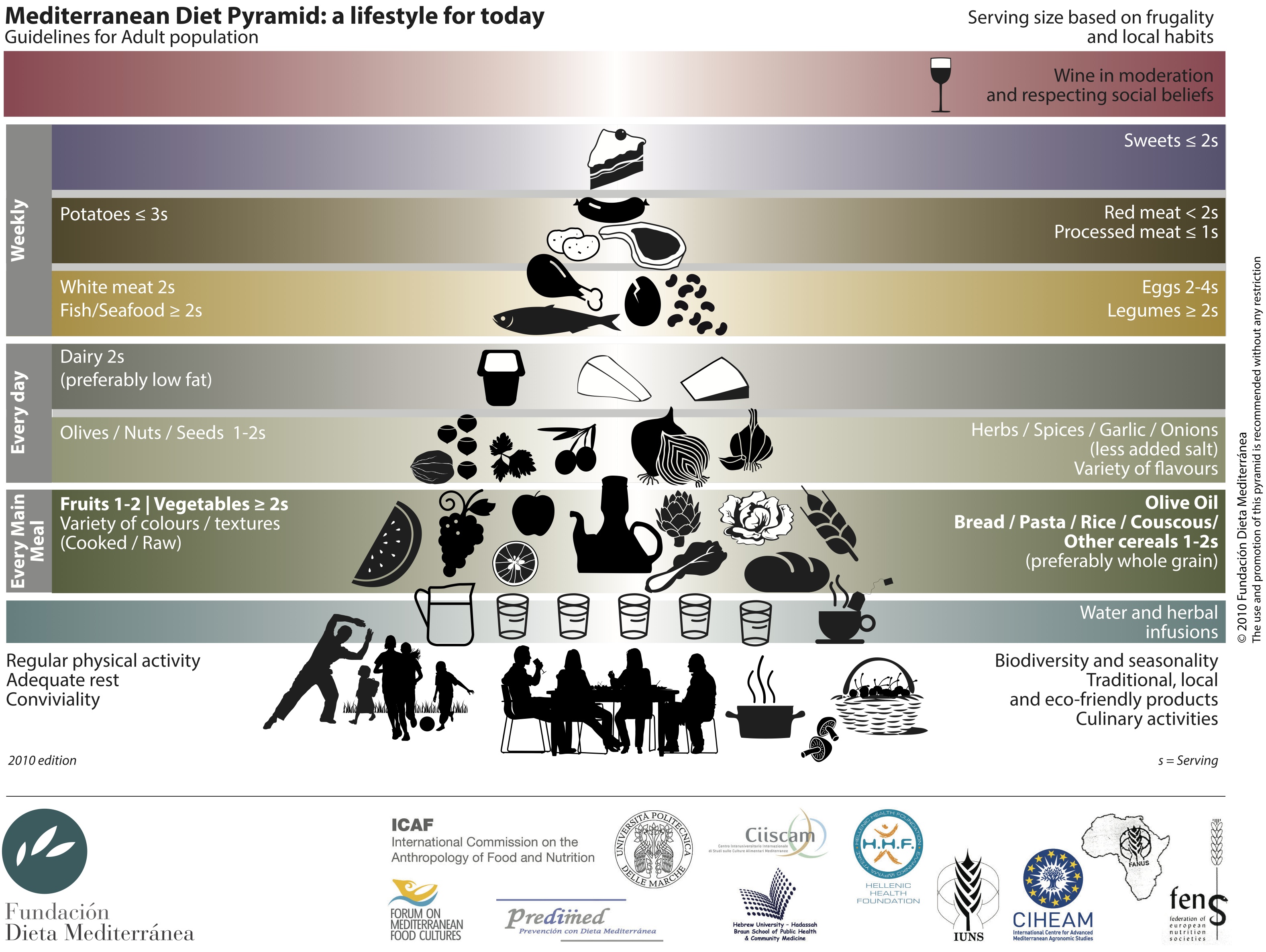
What is the Mediterranean Diet?
More of an approach to eating than a strict diet plan, the Mediterranean diet pyramid—introduced in the 1990s by the World Health Organization and other health leaders—is based on the mid-20th-century dietary traditions of Greece, southern Italy, and Crete. The Mediterranean Diet (MedDiet) is a term used to identify a dietary pattern originating from the unique multi-millennial interplay between natural food resources and the eating practices of people living in the Mediterranean basin.
The common features characterizing the MedDiet are defined as (a) daily consumption of non-refined cereals and other products (e.g., whole grain bread, whole grain pasta, and brown rice), fresh fruits, vegetables, nuts, and low-fat dairy products; (b) olive oil as the principal source of lipids; (c) moderate intake of alcohol, preferably red wine, with meals; (d) moderate consumption of fish, poultry, potatoes, eggs, and sweets.
It has been widely acknowledged that the MedDiet encompasses many aspects beyond nutritional behavior, including social, cultural, economic, and environmental features. The association of these cultural and nutritional features with physical activity is woven into the MedDiet model, making it widely considered to be a healthy lifestyle rather than a dietary pattern.
The Scientific Evidence: What Research Really Shows
The body of research supporting the Mediterranean diet's health benefits is nothing short of impressive. Over the past 3 decades, substantial evidence has accumulated to strongly support the benefits of the MedDiet in preventing chronic diseases and promoting healthy aging.
In the Spanish landmark PREDIMED trial (Prevención con Dieta Mediterránea), with 7447 high-risk participants initially free of cardiovascular disease (CVD), a 5-year intervention with a MedDiet significantly reduced the incidence of a composite major CVD end point that included nonfatal stroke, nonfatal coronary heart disease (CHD), and all fatal CVD events.
But the benefits extend far beyond heart health. A recent 2024 meta-analysis examining adherence to the Mediterranean diet found substantial protective effects: the combined hazard ratio for cognitive impairment among those adhering to the Mediterranean diet was 0.82 (95% CI 0.75-0.89); for dementia, the HR was 0.89 (95% CI 0.83-0.95); and for AD, the HR was 0.70 (95% CI 0.60-0.82), indicating substantial protective effects.
How the Mediterranean Diet Works: The Science Behind the Benefits
The Mediterranean diet's powerful health effects aren't magic—they're the result of well-understood biological mechanisms. Accumulating evidence indicates that the five most important adaptations induced by the Mediterranean dietary pattern are: (a) lipid-lowering effect, (b) protection against oxidative stress, inflammation and platelet aggregation, (c) modification of hormones and growth factors involved in the pathogenesis of cancer, (d) inhibition of nutrient sensing pathways by specific amino acid restriction, and (e) gut microbiota-mediated production of metabolites influencing metabolic health.
Fighting Inflammation
One of the Mediterranean diet's most remarkable abilities is its anti-inflammatory power. A recent meta-analysis of 33 randomized controlled trials involving 3,476 participants found significant reductions in high-sensitivity C-reactive protein (hs-CRP), interleukin (IL)-6, and IL-17 in the MD group in comparison to a control diet.
A systematic review of 20 RCTs reported the following changes in biomarkers in association with a MedDiet: decreased pro-inflammatory cytokines IL-1α, IL-1β, IL-5, IL-6, IL-7, IL-8, IL-18, IFN-γ, TNF-α, CRP, high-sensitivity CRP and increased anti-inflammatory cytokines IL-4 and IL-10.
Gut Health Connection
Changes in diet alter the gut microbiota which are intricately intertwined with human physiology, as gut microbiota-derived metabolites play a key role in biological pathways throughout the body. Recent published studies examine the potential role of gut metabolites, including short-chain fatty acids, bile acids, trimethylamine-N-oxide, and lipopolysaccharide, in modulating inflammation after consumption of a Mediterranean-like diet.
Real Health Benefits You Can Expect
Heart Health
"This style of eating can play a big role in preventing heart disease and stroke and reducing risk factors such as obesity, diabetes, high cholesterol, and high blood pressure," notes the American Heart Association. Very numerous prospective observational studies and 3 randomized clinical trials, as well as meta-analyses of cohorts and RCTs have demonstrated the primary and secondary preventive effect of MedDiet towards cardiovascular diseases and more specifically CHD. A protective effect of MedDiet towards CHD is clearly confirmed.
Brain Health and Cognitive Function
While several studies have found links between the diet and brain health, some of the strongest evidence came in 2024 out of the University of Barcelona, where researchers followed nearly 850 French citizens age 65 and over for more than a decade. Those who followed the Mediterranean diet were less likely to have age-related cognitive decline.
Quality of Life and Longevity
A 2025 study published in Nutrients looked at the multidimensional concept of health-related quality of life (HRQoL)—which comprises an individual's physical, mental, and social well-being. The researchers found "significant benefits in the management of various chronic diseases commonly encountered in aging populations," and that the diet's "multifaceted mechanisms, including anti-inflammatory, antioxidative, metabolic-regulating, and gut-modulating effects, underscore its potential use as a therapeutic tool for improving health in patients with neurodegenerative diseases, metabolic disorders, and musculoskeletal conditions."
Bone Health
The randomized clinical trial analysis of 924 people—part of the large Predimed-Plus study—who were overweight or obese, found that the weight loss that resulted from a reduced-calorie version of the Mediterranean diet combined with exercise led to an increase in bone mineral density, especially at the lumbar spine, over three years. "Adopting a Mediterranean-style eating pattern and context may have modest beneficial effects on mitigating bone deterioration," wrote the authors.

Image: 3. Lifestyle Factors Affecting Cardiovascular Risk diet — Donna K. Arnett, Roger S. Blumenthal, Michelle A. Albert, Andrew B. Buroker, Zac (CC BY-SA 4.0), via Wikimedia Commons
Practical Steps to Adopt the Mediterranean Diet
Ready to start incorporating Mediterranean principles into your daily routine? Here's how to make the transition both sustainable and enjoyable:
Start with Olive Oil
Make extra virgin olive oil your go-to cooking fat. Use it for sautéing vegetables, drizzling over salads, and even as a finishing touch on cooked dishes. The monounsaturated fats in olive oil are a cornerstone of the diet's heart-healthy benefits.
Fill Half Your Plate with Vegetables
Aim for a rainbow of colors at every meal. Think roasted bell peppers, fresh tomatoes, leafy greens, eggplant, zucchini, and artichokes. These provide the antioxidants and fiber that contribute to the diet's anti-inflammatory effects.
Choose Whole Grains
Swap refined grains for whole grain versions. Choose brown rice over white, whole grain bread instead of white bread, and try ancient grains like quinoa, farro, and bulgur.
Include Fish Twice a Week
Focus on fatty fish rich in omega-3 fatty acids like salmon, sardines, mackerel, and tuna. If you're not a fish lover, start with milder options or try incorporating fish into familiar dishes.
Snack on Nuts and Seeds
Replace processed snacks with a handful of almonds, walnuts, or mixed nuts. They provide healthy fats, protein, and fiber that help keep you satisfied between meals.
Moderate Portions of Dairy and Poultry
Include small amounts of Greek yogurt, cheese, and lean poultry. These provide protein while keeping saturated fat intake reasonable.
Limit Red Meat
Reserve red meat for special occasions, aiming for no more than a few servings per month. When you do eat it, choose lean cuts and smaller portions.
Stay Hydrated and Consider Wine Mindfully
Water should be your primary beverage. If you choose to drink alcohol, limit it to one glass of red wine per day for women and two for men, preferably with meals.
Making It Work in Your Real Life
The Mediterranean diet is particularly appealing because it's flexible and adaptable to different lifestyles and budgets. Here are some practical tips:
- Meal prep Mediterranean-style: Prepare large batches of olive oil-roasted vegetables, cook grains in bulk, and portion out nuts for easy snacking.
- Budget-friendly swaps: Frozen vegetables are just as nutritious as fresh, canned fish is affordable and convenient, and dried beans and lentils are protein powerhouses that cost pennies per serving.
- Start gradually: You don't need to overhaul your entire diet overnight. Begin by making one or two changes per week.
- Focus on whole foods: The closer a food is to its natural state, the better it fits the Mediterranean pattern.
Sample Day of Mediterranean Eating
Breakfast: Greek yogurt topped with berries, chopped walnuts, and a drizzle of honey
Lunch: Large salad with mixed greens, cherry tomatoes, cucumber, olives, chickpeas, feta cheese, and olive oil vinaigrette
Snack: Apple slices with almond butter
Dinner: Grilled salmon with roasted vegetables (zucchini, bell peppers, onions) and quinoa, finished with lemon and herbs
Common Misconceptions and Challenges
Despite its proven benefits, some people hesitate to try the Mediterranean diet due to misconceptions:
"It's too expensive":" While some Mediterranean ingredients can be pricey, the diet emphasizes affordable staples like beans, whole grains, and seasonal vegetables. The key is focusing on simple, whole foods rather than specialty items.
"I don't like fish":" Fish is important but not mandatory for every meal. You can get omega-3 fatty acids from walnuts, flaxseeds, and chia seeds, though aim to include fish when possible.
"It's only for Mediterranean people":" Numerous studies conducted in non-Mediterranean populations have found similar benefits of Mediterranean-type dietary patterns, proving its universal applicability.
The Bottom Line
The Mediterranean diet stands out not just as another eating plan, but as a scientifically validated pathway to better health and longevity. The majority of MedDiet's beneficial effects could be primarily related to its anti-inflammatory and anti-oxidant properties as well as the effectiveness of this dietary pattern in controlling waist circumference and obesity.
What makes this approach particularly appealing is its sustainability and flexibility. Unlike restrictive diets that eliminate entire food groups, the Mediterranean pattern emphasizes abundance—more vegetables, more healthy fats, more flavor—rather than deprivation. Greater adherence to a traditional Mediterranean diet has consistently been associated with lower morbidity and mortality from cardiovascular disease, diabetes and many cancers, and lower all-cause mortality.
The beauty of the Mediterranean diet lies in its simplicity: eat more plants, choose quality fats like olive oil, include fish regularly, and savor your meals. It's not just about the food—it's about adopting a lifestyle that prioritizes nourishment, enjoyment, and long-term health. Start small, be consistent, and remember that every Mediterranean-inspired meal is a step toward better health.
Sources & References:
Fekete M, et al. — Geroscience, 2025
Keshani M, et al. — Nutrition Reviews, 2025
Godos J, et al. — Nutrients, 2025
Delarue J. — Cahiers de Nutrition et de Diététique, 2025
Tosti V, et al. — Journal of Gerontology, 2018
Disclaimer: This article is for informational purposes only and does not constitute medical advice. Always consult a qualified healthcare professional before making health decisions.