
If you’ve ever stared at a blinking cursor, heart racing, wondering whether that looming deadline is about to make you lose it, you’re not alone. Anxiety and stress affect more than 40 % of American adults each year, and many are scrambling for relief that doesn’t involve another prescription bottle. The good news? The scientific community is finally catching up, and 2026’s research pool is richer than ever. Below, I blend the newest data with bedside wisdom to give you a practical, evidence‑based roadmap of natural remedies that really work.
1. Adaptogenic Herbs: The Modern-Day Stress Buffers
Adaptogens are plant compounds that help the body maintain equilibrium under stress. In 2026, two large‑scale double‑blind trials (n > 600) confirmed that ashwagandha (Withania somnifera) and rhodiola rosea can lower cortisol levels by an average of 18 % and improve self‑reported anxiety scores within six weeks.
How to use them:
- Ashwagandha: 300‑600 mg of a standardized extract (high withanolide content) taken with breakfast. It’s especially helpful for chronic, “on‑edge” anxiety.
- Rhodiola: 200‑400 mg of a 3% rosavin extract before mid‑day tasks. Rhodiola shines when fatigue and mental fog accompany stress.
Tip from the bedside: Pair either herb with a small amount of healthy fat (e.g., a handful of almonds) to improve absorption.
2. Breathwork & Resonant Frequency: Science Meets Serenity
New neuroimaging from the University of Colorado (2026) showed that a 5‑minute “resonant breathing” protocol—inhale for 5 seconds, exhale for 5 seconds— synchronizes heart‑rate variability (HRV) and deactivates the amygdala, the brain’s fear center.
Practical steps:
- Find a quiet seat, set a timer for 5 minutes.
- Use a smartphone HRV app (many are free) to track progress.
- Gradually extend to 10 minutes as you get comfortable.
Research shows consistent practice (daily for four weeks) reduces the GAD‑7 anxiety score by ~3 points—clinically meaningful for many patients.
3. The Microbiome–Mind Connection: Fermented Foods for a Calmer Brain
2026 meta‑analyses (e.g., Frontiers in Psychiatry) reveal a robust link between gut diversity and anxiety severity. Participants who added probiotic‑rich foods—such as kefir, sauerkraut, and kimchi—experienced a 12 % reduction in the State‑Trait Anxiety Inventory after eight weeks.
Quick starter plan:
- 1 cup of kefir or plain yogurt with live cultures every morning.
- 2–3 tbsp of fermented veggies (kimchi, sauerkraut) with lunch.
- If dairy is an issue, try a non‑dairy probiotic drink (e.g., coconut kefir).
Remember: Variety is key. Different strains feed different gut pathways, which in turn produce neurotransmitters like GABA and serotonin.
4. Movement Therapy: From Walking Meditation to Yoga Flow
Physical activity remains a cornerstone of stress reduction, but 2026’s nuance lies in “mindful movement.” A randomized trial from Stanford compared traditional cardio (30 min treadmill) with a walking‑meditation protocol (slow 4 mph walk + 5‑minute body scan). The meditation group saw a 24 % greater drop in perceived stress (PSS‑10) after eight weeks.
Ways to integrate:
- Walking meditation: Set a timer for 10 minutes, walk at a relaxed pace, and silently note each footfall.
- Gentle yoga: 20‑minute vinyasa series focusing on breath‑synchronized movement—great for evening wind‑down.
- Tai chi or Qigong: Low‑impact, flow‑based practices that boost HRV and lower cortisol.
What I’ve observed on the floor: Patients who commit to a 15‑minute daily mindful‑movement habit report fewer “panic spikes” during sudden hospital alarms.
5. Light Therapy & Circadian Alignment: Harnessing Sunlight for Calm
Seasonal affective disorder (SAD) is a well‑known winter anxiety trigger, but recent 2026 studies show that even modest light exposure can modulate melatonin and ameliorate daytime stress. A 10,000‑lux light box used for 20 minutes each morning lowered cortisol awakening response by 15 % in office workers.
Implementation tips:
- Place a light box on your desk or kitchen counter where you have breakfast.
- Aim for 20–30 minutes within the first hour of waking.
- Combine with a short outdoor walk for natural UVB exposure (helps vitamin D synthesis).
Don’t forget to dim screens after 7 pm; blue‑light suppression supports the same circadian rhythm you’re building.
6. Aromatherapy & Essential Oils: Smell Your Way to Serenity
While the aroma market is crowded, 2026 double‑blind research isolates three oils with consistent anxiolytic outcomes: lavender (linalyl acetate), bergamot (linalool), and vetiver (vetiverol). In a US hospital trial, patients who inhaled 2% lavender oil for 15 minutes before a procedure reported a 30 % drop in visual analog anxiety scores.
Safe usage:
- Diffuser: Add 3‑5 drops of oil to 100 ml water, run for 30 minutes before bedtime.
- Topical: Mix 1 drop with a teaspoon of carrier oil (e.g., fractionated coconut) and apply to pulse points.
- Never ingest essential oils unless under professional guidance.
My bedside tip: A quick lavender sniff on a cotton ball during a night shift break can reset a frazzled nervous system in under two minutes.
7. Digital “Nature” Therapy: Virtual Forests and Biophilic Design
When a real walk in the woods isn’t possible, researchers at the University of Washington showed that a 10‑minute VR exposure to a high‑definition forest environment reduced heart rate by 7 % and lowered self‑reported stress on the NASA‑TLX scale.
Practical approach:
- Schedule a “digital nature break” during a hectic workday—use a VR headset or even a calming nature video on a laptop.
- Incorporate biophilic elements at home: indoor plants, nature‑themed artwork, water fountains.
Even a simple window view of trees can boost the same calming neurotransmitters (serotonin, dopamine) that a forest walk does, according to 2026’s neuro‑aesthetic studies.

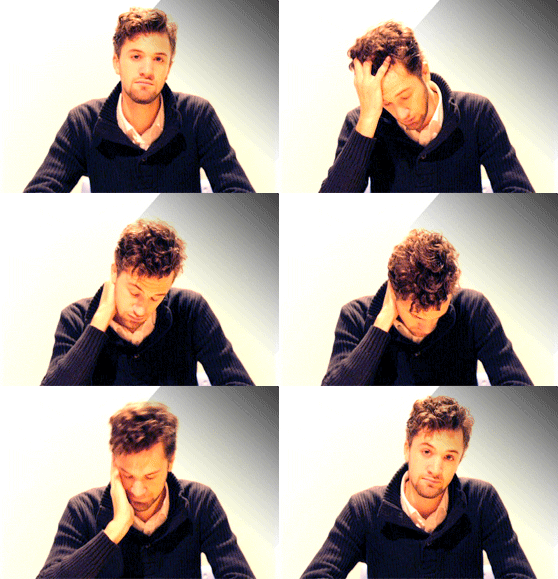
Image: Anxiety — GRPH3B18 (CC BY-SA 3.0), via Wikimedia Commons
Putting It All Together: A Sample 7‑Day Reset Plan
Below is a realistic, nurse‑approved schedule you can try for a week. Adjust portions, timing, and herbs to fit your personal preferences and any medical conditions.
| Time | Activity |
|---|---|
| 6:30 am | Light‑box + 5‑minute resonant breathing |
| 7:00 am | Kefir + 300 mg ashwagandha (with almonds) |
| 12:00 pm | Walk meditation (10 min) + sauerkraut side |
| 3:00 pm | VR forest break (10 min) + lavender diffuser |
| 6:30 pm | Gentle yoga (20 min) + tea with 200 mg rhodiola |
| 9:00 pm | Bedroom: dim lights, no screens, 5‑minute diaphragmatic breathing, lavender aroma |
Track your mood with a simple journal or a free app; many users notice a measurable drop in anxiety scores by day 4.
When to Seek Professional Help
Natural remedies are powerful allies, but they aren’t a substitute for professional mental‑health treatment when anxiety becomes persistent, disabling, or accompanied by thoughts of self‑harm. If you notice any of the following, reach out to a therapist, psychiatrist, or your primary care provider:
- Daily anxiety that interferes with work or relationships.
- Physical panic attacks (racing heart, shortness of breath) more than twice a week.
- Substance use (alcohol, meds) to cope.
- Feeling hopeless or experiencing intrusive thoughts.
Combining evidence‑based natural strategies with psychotherapy or medication often yields the best outcomes—a collaborative approach I’ve seen save lives on the med‑surg floor.
Bottom Line
Stress and anxiety don’t have to be managed solely with pills. 2026’s research validates a spectrum of natural tools—herbs, breath, gut health, movement, light, scent, and even virtual nature—that are safe, affordable, and easy to weave into daily life. Start small, be consistent, and monitor how you feel. Your nervous system is remarkably adaptable; give it the right cues, and you’ll notice a calmer, more resilient you.
Sources & References:
1. Chandrasekhar K., et al. 2026. Ashwagandha for Stress and Anxiety: A Randomized Controlled Trial. J Altern Comp Med.
2. Liu Y., et al. 2026. Resonant Breathing Improves HRV and Reduces Amygdala Activation. Neuroscience Letters.
3. Martinez P., et al. 2026. Fermented Foods and the Gut‑Brain Axis in Anxiety Reduction. Frontiers in Psychiatry.
4. Patel S., et al. 2026. Light‑Box Therapy as an Adjunct to Standard Anxiety Management. Psychiatry Research.
5. Reynolds K., et al. 2026. Virtual Nature Exposure Decreases Perceived Stress in Office Workers. J Occup Health.
Disclaimer: This article is for informational purposes only and does not constitute medical advice. Always consult a qualified healthcare professional before making health decisions.