
I'll be honest with you – I used to think stress management was just about taking deep breaths and calling it a day. That was until I hit a wall three years ago when work deadlines, family responsibilities, and financial pressures all collided at once. I was waking up with jaw pain from grinding my teeth, my heart would race over the smallest things, and I felt like I was running on empty 24/7.
That's when I realized I needed real, sustainable solutions – not just quick fixes. After researching and testing various approaches backed by solid science, I discovered seven powerful, natural ways to reduce stress that don't require a single pill. These methods have transformed not only my own life but the lives of countless patients I've worked with over the past 12 years as a registered nurse.
The Science Behind Natural Stress Reduction
Before diving into specific techniques, it's crucial to understand what happens in your body during stress. When you encounter a stressor, your hypothalamic-pituitary-adrenocortical (HPA) system kicks into high gear, releasing cortisol and other stress hormones. While this response is designed to help you handle immediate threats, chronic activation wreaks havoc on your physical and mental health.
The connection between chronic psychological stress and the onset of various diseases, including diabetes, HIV, cancer, and cardiovascular conditions, is well documented. This review synthesizes current research on the neurological, immune, hormonal, and genetic pathways through which stress influences disease progression, affecting multiple body systems: nervous, immune, cardiovascular, respiratory, reproductive, musculoskeletal, and integumentary.
The good news? Natural interventions can effectively interrupt this cascade and help restore your body's balance. Central to this review is an evaluation of 16 Behavioral Stress Reduction Programs (BSRPs) across over 200 studies, assessing their effectiveness in mitigating stress-related health outcomes.

1. Harness the Power of Movement
Exercise isn't just about physical fitness – it's one of the most potent stress-busters available. Exercise in almost any form can act as a stress reliever. Being active can boost your feel-good endorphins and distract you from daily worries.
Recent research reveals just how powerful exercise can be for stress management. A total of 34 articles comprising 80 individual studies and 8,020 participants were included in the meta-analysis. Physical activity interventions were significantly associated with improvements in university students' mental health outcomes. Specifically, exercise demonstrated a large positive effect on overall mental health (SMD = 0.91, 95% CI: 0.15 to 1.67), enhanced wellbeing (SMD = 0.41, 95% CI: 0.29 to 0.53), and led to moderate reductions in anxiety (SMD = −0.62, 95% CI: −0.84 to −0.41), depression (SMD = −0.67, 95% CI
What makes exercise so effective?
- Specifically, physical activity increases a brain chemical called beta-endorphin. This can increase feelings of happiness and reduce feelings of pain.
- It cuts down on the negative effects of stress. Exercise can offer relief while the body is reacting to stress, such as the flight-or-fight response. It can help the body's systems practice working together when dealing with stress.
- Exercising a few times a week can increase your self-confidence, improve your mood, help you relax, and lower symptoms of mild depression and anxiety. Exercise also can improve your sleep, which is often disturbed by stress, depression and anxiety.
Getting Started: You don't need to become a marathon runner. Most healthy adults should get at least 150 minutes of moderate aerobic activity or 75 minutes of vigorous aerobic activity each week. Start with 10-minute walks and gradually build up. Even activities like dancing, gardening, or playing with your kids count!
2. Connect with Nature (Even Virtually)
There's something almost magical about the way nature soothes our stressed minds, and science is finally catching up to what many of us have felt intuitively. The results indicate that exposure to virtual natural environments effectively reduces anxiety levels (SMD = 0.82, p < 0.001, large effect), stress levels (SMD = 0.577, p = 0.003, moderate effect), and depression levels (SMD = 0.621, p < 0.001, moderate effect) in healthy adults.
What's particularly fascinating is that even digital nature experiences can be surprisingly effective. Digital natural environments had the same level of stress recovery compared to actual environmental exposures with the same intervention content (SMD = −0.01; 95% CI: −0.15, 0.12). The present study concludes that previous research has generally shown that stress levels are reduced in both digital and actual natural environments.
Nature's stress-busting benefits include:
- Meta-analysis results showed increased natural exposure was associated with decreased salivary cortisol -0.06 (95 % CI -0.08, -0.04), state-of anxiety -12.48 (95 %CI -26.61, 1.66), self-reported stress -0.33 (95 %CI -0.78, 0.13), systolic blood pressure (SBP) -3.82 (95 %CI -6.77, -0.86), diastolic blood pressure (DBP) -2.21 (95 %CI -3.93, -0.49), Ln(LF/HF) -0.29 (95 %CI -0.41, -0.18) of heart rate variability (HRV) and increased restorative outcomes 4.82 (95 %CI -1.87, 11.51). These measurements provide the most convincing evidence that exposure to the natural environment can lead to stress reduction, and ultimately improve health.
- Reduced cortisol levels (your primary stress hormone)
- Lower blood pressure and improved heart rate variability
- Enhanced mood and cognitive restoration
Practical Tips:
- Take a 15-minute walk in a park during your lunch break
- Keep plants in your workspace or home
- Use nature sounds or videos during work breaks
- Plan weekend hiking trips or beach visits
- Even looking at nature photos can help reset your stress response
3. Master the Art of Mindful Breathing
If there's one technique I recommend above all others for immediate stress relief, it's mindful breathing. On the one hand, the current multi-site study showcases how even short mindfulness exercises can be valuable tools in situations when short-term mood regulation is necessary, such as withstanding a stressful exam or calming oneself in a road-rage situation. The possibility that short-term mindfulness practice adds to one's repertoire of skills to reduce stress need not harm nor challenge the popular expectation that mindfulness meditation brings about positive results only via prolonged practice.
The research on mindfulness and breathing meditation is compelling. Participants in the mindfulness breathing meditation group self-reported this intervention as highly acceptable and effective in promoting stress reduction, emotional regulation, and attentional control. The results showed significant improvement in cognitive flexibility and reduction in perceived stress levels after the intervention in the mindful
The 4-7-8 Breathing Technique:
- Exhale completely through your mouth
- Close your mouth and inhale through your nose for 4 counts
- Hold your breath for 7 counts
- Exhale through your mouth for 8 counts
- Repeat 3-4 times
This technique activates your parasympathetic nervous system, essentially telling your body it's safe to relax. I've seen patients use this successfully before medical procedures, job interviews, and even during panic attacks.
Box Breathing for Daily Practice:
- Inhale for 4 counts
- Hold for 4 counts
- Exhale for 4 counts
- Hold empty for 4 counts
- Repeat for 5-10 cycles
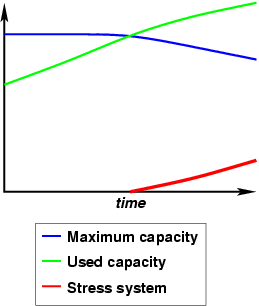
Image: Demystifying Depression-Stress Compensation — Name of Feather at English Wikibooks (CC BY-SA 3.0), via Wikimedia Commons
4. Build Your Support Network
One of the most overlooked aspects of stress management is the power of social connection. The current study substantiates the hypothesis that social support, emanating from diverse sources such as family, friends, and significant others, is positively correlated with positive affect and inversely associated with symptoms of anxiety and depression. In essence, heightened perceived social support corresponds to increased positive affect and diminished anxiety and depression symptoms.
The research on social support is particularly striking. A statistical review of 148 studies conducted between 1982 and 2007 involving over 300,000 participants concluded that individuals with stronger social relationships have a 50% greater likelihood of survival compared to those with weak or insufficient social relationships. According to the researchers, the magnitude of the effect of social support observed in this study is comparable with quitting smoking and exceeded many well-known risk factors for mortality, such as obesity and physical inactivity.
How social support reduces stress:
- Social support may moderate genetic and environmental vulnerabilities and confer resilience to stress, possibly via its effects on the hypothalamic-pituitary-adrenocortical (HPA) system, the noradrenergic system, and central oxytocin pathways.
- Provides practical help during challenging times
- Offers different perspectives on problems
- Creates a sense of belonging and purpose
- Buffers the impact of stressful events
Building Your Network:
- Nurture existing relationships through regular contact
- Join groups aligned with your interests or values
- Volunteer for causes you care about
- Consider professional counseling or support groups
- Be the support others need – giving helps too
5. Use Sound as Medicine
Sound therapy might seem unconventional, but research shows it's a powerful stress-reduction tool. Sound interventions offer promising, noninvasive methods for stress reduction. This review suggests that future research should address gaps in the study of nonmusical sound interventions and further investigate the neural mechanisms underlying stress responses to sound.
Nonmusical sounds, such as nature sounds and calming voices, also demonstrate potential for stress relief, although research in this area remains limited. While most sound interventions showed positive effects, some studies reported adverse effects, indicating that sound can both alleviate and induce stress. The key is finding what works for your unique preferences.
Effective Sound Interventions:
- Nature sounds: Ocean waves, rainfall, forest ambience
- Binaural beats: Audio tracks that may influence brainwave patterns
- Classical music: Particularly pieces with 60-70 beats per minute
- Guided meditations: Combine relaxing voices with calming instructions
- Singing or humming: Creates vibrations that activate the vagus nerve
Creating Your Sound Sanctuary:
- Use noise-canceling headphones for deeper immersion
- Experiment with different types to find your preference
- Create playlists for different situations (work, sleep, exercise)
- Consider the volume – too loud can be counterproductive
6. Practice Progressive Muscle Relaxation
Progressive Muscle Relaxation (PMR) is a technique that involves systematically tensing and then relaxing different muscle groups. Relaxation techniques, including progressive muscle relaxation (PMR) and diaphragmatic breathing, assist in contracting and relaxing muscle groups to aid individuals in identifying and reducing physical tension and foster relaxation due to increased parasympathetic nerve activity, resulting in emotional tranquility.
Research shows PMR is particularly effective for certain populations. Various methods, such as PMR, breathing exercises, and biofeedback, significantly reduced blood pressure (BP), anxiety, and stress levels in hypertensive and cardiovascular patients. Additionally, interventions like Benson's relaxation and jaw relaxation demonstrated improvements in patient QoL and cardiovascular health outcomes, underscoring the potential benefits of integrating relaxation techniques into treatment programs for heart-related conditions.
Basic PMR Technique:
- Start with your toes – tense them for 5 seconds, then release
- Move up to your calves, thighs, buttocks, and so on
- Include your arms, shoulders, neck, and face
- With each release, notice the contrast between tension and relaxation
- End by taking several deep breaths and enjoying the full-body relaxation
I recommend practicing PMR before bed – it not only reduces stress but often improves sleep quality significantly.
7. Develop Structured Coping Strategies
Having a systematic approach to handling stress makes all the difference. As a positive mental feature, resilience helps individuals counter negative influences of stressors and allows them to cope with adversities or stressful events in a better way, experience fewer negative emotions, and gain a higher level of subjective wellbeing. In coping with stress, individuals tend to adopt different cognitive and behavioral efforts to manage potential threats and effectively reduce the impact that stress and its adverse consequences have on personal resources. Several studies have revealed that adopting suitable coping styles demonstrates a noteworthy positive correlation with a higher level of resilience, and accordingly fosters positive outcomes of mental health and psychological wellbeing.
Problem-Focused Coping:
- Identify what aspects of the situation you can control
- Break large problems into smaller, manageable steps
- Seek information or resources to address the issue
- Take direct action where possible
Emotion-Focused Coping:
- Practice acceptance for things beyond your control
- Use reframing techniques to find alternative perspectives
- Engage in activities that regulate emotions (journaling, art, music)
- Seek emotional support from trusted friends or professionals
Building Your Stress Response Toolkit:
- Create a "stress emergency kit" with quick techniques you can use anywhere
- Develop routines for high-stress periods
- Practice techniques when calm so they're available during stress
- Regularly assess what's working and adjust accordingly
The Bottom Line
Stress is an unavoidable part of life, but suffering from its effects doesn't have to be. These seven science-backed approaches offer you a comprehensive toolkit for managing stress naturally, without relying on medications that may have unwanted side effects.
The key to success lies in consistency and personalization. Start with one or two techniques that resonate with you, practice them regularly, and gradually add others. Remember, what works for your neighbor might not work for you, and that's perfectly normal.
As someone who has both struggled with overwhelming stress and helped countless patients find their path to better stress management, I can tell you that the investment you make in learning these techniques will pay dividends for years to come. Your future self – calmer, more resilient, and better equipped to handle life's challenges – will thank you.
The science is clear: natural stress reduction methods work. The question isn't whether they'll help – it's which combination will work best for your unique situation and lifestyle.
Sources & References:
Virtual nature, real relief study — Nature Digital Medicine, 2025
Effects of Nature Exposure Therapies on Stress — PMC, 2024
Sound Interventions on Mental Stress Response — JMIR Mental Health, 2025
Effectiveness of Physical Activity on Mental Health — Frontiers in Psychology, 2025
Social Support and Mental Health Research — Frontiers in Psychology, 2024
Disclaimer: This article is for informational purposes only and does not constitute medical advice. Always consult a qualified healthcare professional before making health decisions.