
A 2026 cross-sectional study published in the European Journal of Nutrition found that adults enrolling in a weight-loss dietary program who already followed a Mediterranean-style eating pattern showed significantly lower levels of hematologic inflammatory markers — the neutrophil-to-lymphocyte ratio and platelet-to-lymphocyte ratio — than those who didn't. That connection matters because chronic, low-grade inflammation is increasingly recognized as a direct brake on metabolic function, interfering with insulin signaling and making the body more resistant to the calorie deficit needed for sustainable fat loss.
The foods you choose don't just supply calories. They interact with your hormonal environment, your gut microbiome, and your inflammatory status in ways that measurably affect how efficiently your body burns fat. This article walks through the specific food categories that consistently appear in the research as supportive of healthy metabolic function — and the patterns that work against it.
How Food Quality Shapes Your Resting Metabolism
Resting metabolic rate (RMR) — the energy burned at rest — is influenced by far more than just muscle mass. Hormonal signals including insulin, leptin, and cortisol interact with the food you consume to either accelerate or slow fat oxidation. Diets built around processed, low-fiber, high-glycemic foods chronically elevate insulin, increase systemic inflammation, and blunt the cellular signaling pathways that promote fat use as fuel.
In contrast, whole-food patterns centered on unprocessed vegetables, legumes, lean proteins, and quality fats keep insulin levels more stable, reduce post-meal inflammatory responses, and support the microbiome communities that produce short-chain fatty acids — compounds with documented roles in metabolic regulation, including improved insulin sensitivity and reduced gut permeability.
The Mediterranean Diet Pattern: What the Evidence Shows
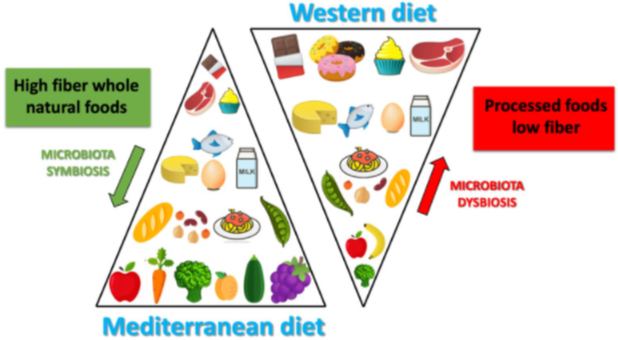
Image: Differences between Mediterranean diet and Western diet — Merra G, Noce A, Marrone G et al. (CC BY-SA 4.0), via Wikimedia Commons
The distinction between these eating patterns isn't about any single food. The 2026 study in the European Journal of Nutrition (Menichetti et al.) compared adults seeking a weight-loss program and found that those with higher Mediterranean diet adherence scores had meaningfully lower inflammatory indices. When systemic inflammation is lower, insulin sensitivity tends to be better — and better insulin sensitivity directly supports the hormonal conditions for fat oxidation.
The Mediterranean pattern centers on:
- Abundant vegetables and legumes (the dietary foundation)
- Whole grains over refined cereals
- Extra virgin olive oil as the primary fat source
- Fish and seafood at least twice per week
- Moderate intake of poultry, dairy, and eggs
- Minimal processed meats and added sugars
This is not a rigid prescription. It is a set of food-quality priorities that consistently appear in metabolic and longevity research as beneficial across diverse populations.
Protein: The Most Thermogenic Macronutrient
No other macronutrient carries as large a thermic effect as protein. The body burns approximately 20–35% of protein's caloric value during digestion and processing — compared to 5–10% for carbohydrates and 0–3% for fats. That thermogenic advantage, combined with protein's role in preserving lean muscle mass during a calorie deficit, makes it the most critical macronutrient to prioritize when supporting metabolism during weight loss.
Practically, this means including a quality protein source at every meal:
- Eggs, Greek yogurt, or cottage cheese at breakfast
- Legumes (lentils, chickpeas, black beans) or canned fish at lunch
- Salmon, chicken, tofu, or lean red meat at dinner
Adults in a weight-loss phase generally need 1.2–1.6 grams of protein per kilogram of body weight to maintain metabolic rate and preserve the muscle tissue that drives RMR. Falling short of this consistently leads to the "metabolic adaptation" that makes long-term weight maintenance difficult.
High-Fiber Foods and the Gut-Metabolism Connection
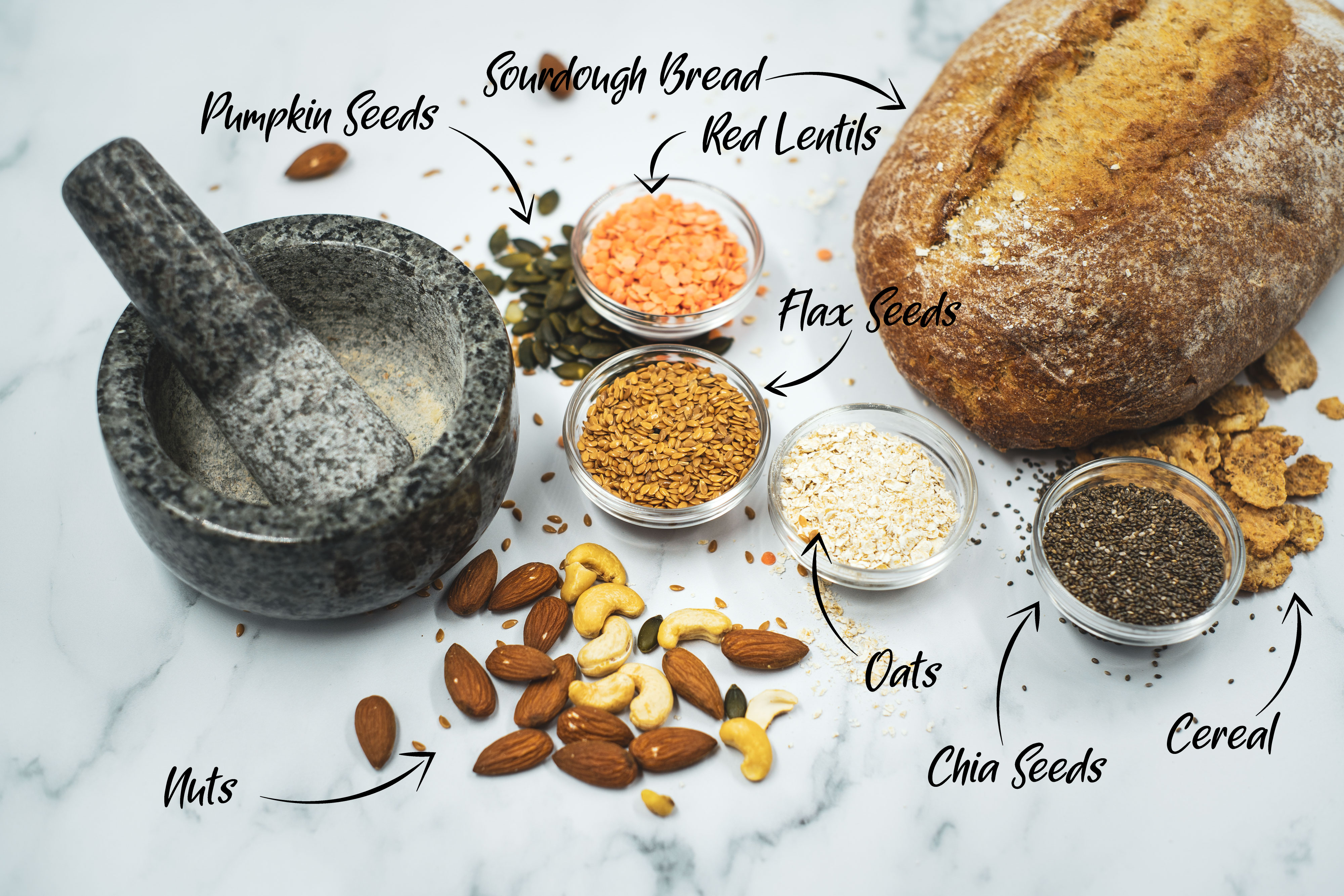
Image: Foods with a High Fibre Content labelled — formulatehealth (CC BY 2.0), via Wikimedia Commons
Dietary fiber doesn't just slow digestion and extend satiety — it actively feeds the gut bacteria that produce butyrate and other short-chain fatty acids with systemic metabolic effects. Butyrate has been shown to improve insulin sensitivity, reduce intestinal inflammation, and promote mitochondrial efficiency in metabolic tissue.
The fiber-rich foods with the strongest metabolic track record:
- Oats: Beta-glucan fiber slows glucose absorption and promotes satiety hormones
- Legumes: Deliver high soluble fiber and plant protein simultaneously
- Chia seeds and flaxseeds: Rich in soluble fiber and omega-3 fatty acids
- Cruciferous vegetables (broccoli, Brussels sprouts, cauliflower): Low calorie density, high fiber, rich in phytonutrients
- Whole grains: Maintain more stable post-meal blood glucose compared to refined alternatives
Most adults consume far less fiber than the recommended 25–38g per day. Closing that gap supports microbiome diversity, reduces post-meal inflammatory responses, and contributes measurably to metabolic health over weeks to months.
Healthy Fats and Hormonal Balance
Not all fats impair weight loss. Monounsaturated fats (olive oil, avocado, almonds) and omega-3 polyunsaturated fats (fatty fish, chia seeds, walnuts) carry well-documented anti-inflammatory effects that directly support metabolic function.
Omega-3 fatty acids in particular influence the production of adiponectin — a hormone that promotes fat oxidation and improves insulin sensitivity. Chronically low adiponectin levels associate with obesity, insulin resistance, and metabolic syndrome. Adequate omega-3 intake helps maintain healthy levels of this fat-burning hormone.
Practical sources worth prioritizing:
- 2–3 servings of fatty fish per week (salmon, sardines, mackerel)
- 1–2 tablespoons of extra virgin olive oil daily
- A small handful of walnuts or chia seeds most days
Patterns That Work Against Your Metabolism
Understanding what impairs metabolism is as important as knowing what supports it:
Ultra-processed foods: These typically combine refined carbohydrates, added sugars, industrial seed oils in excessive quantities, and preservatives — a pattern that consistently associates with elevated inflammatory markers and worse metabolic outcomes across population studies.
Added sugars: Excess fructose from added sugars (not whole fruit) is metabolized primarily in the liver, promoting fat accumulation, insulin resistance, and low-grade inflammation when consumed regularly in high amounts.
Refined grains: White bread, white rice, and pasta from refined flour spike blood glucose sharply, promote insulin surges, and leave little residual satiety or nutrient value to show for the calories consumed.
Alcohol: Beyond its caloric density, alcohol temporarily halts fat oxidation as the liver prioritizes clearing it — directly interrupting the metabolic processes that support weight loss.
This doesn't require perfection. The research consistently supports a pattern-level approach: the majority of food choices driving a positive metabolic environment, with room for flexibility. Rigid restriction tends to backfire; sustainable food quality habits tend to compound.
| Food Category | Best Examples | Metabolic Role | Target Frequency |
|---|---|---|---|
| Lean proteins | Eggs, salmon, Greek yogurt, lentils | High thermic effect, muscle preservation | Every meal |
| High-fiber vegetables | Broccoli, spinach, kale, peppers | Blood glucose stability, microbiome support | 3–5 servings/day |
| Legumes | Chickpeas, black beans, lentils | Dual protein + fiber benefit | 3–5×/week |
| Whole grains | Oats, barley, quinoa, farro | Sustained energy, beta-glucan fiber | Daily |
| Healthy fats | Olive oil, avocado, almonds, walnuts | Anti-inflammatory, adiponectin support | Daily in moderation |
| Fatty fish | Salmon, sardines, mackerel | Omega-3, insulin sensitivity | 2–3×/week |
| Ultra-processed foods | Chips, fast food, packaged snacks | Promote inflammation, insulin resistance | Minimize |
| Added sugars | Sodas, candy, sweetened cereals | Liver fat accumulation, blood glucose spikes | Minimize |
Frequently Asked Questions
Do metabolism-boosting foods actually make a meaningful difference?
Individual foods don't "boost" metabolism dramatically on their own. But dietary quality patterns — particularly those that reduce systemic inflammation, support gut microbiome diversity, and maintain stable blood glucose — measurably influence the hormonal signals that regulate fat oxidation, satiety, and energy expenditure. The cumulative effect over weeks and months is real, even if no single food is transformative in isolation.
Is the ketogenic diet better than a Mediterranean approach for metabolism?
Both approaches can produce weight loss when they create a calorie deficit. The Mediterranean diet has stronger and broader human evidence for cardiovascular and inflammatory benefits. A 2026 study in the Journal of Molecular Histology raised questions about the long-term effects of very low-carbohydrate ketogenic diets on thyroid function in animal models, underscoring that highly restrictive dietary patterns warrant more research before being universally recommended. The Mediterranean pattern remains the most consistently supported by human clinical and observational research.
How long before food quality changes begin affecting metabolism?
Gut microbiome composition begins shifting measurably within 3–5 days of a sustained dietary pattern change. Inflammatory markers typically take 4–8 weeks of consistent adherence to show significant improvement in most studies. Meaningful metabolic adaptations in the context of weight management tend to compound over months, not days — which is precisely why sustainable patterns outperform short-term interventions.
There is no metabolic shortcut in a bottle or a single food category. What the evidence consistently supports — including the 2026 European Journal of Nutrition study — is a whole-food, anti-inflammatory dietary pattern centered on high-fiber vegetables and legumes, quality protein at every meal, healthy fats, and minimal ultra-processed foods. We recommend building your eating habits around these principles rather than chasing individual metabolism boosters. The foods that reliably reduce inflammation and stabilize blood glucose are the same ones that support long-term, sustainable fat loss.
Sources & References:
Menichetti F, et al. Adherence to the Mediterranean diet is inversely associated with hematologic inflammatory indices in adults seeking a weight loss dietary program. Eur J Nutr. 2026 Aug 6. PMID: 42560509
Ibrahim RA, et al. Effect of long-term use of very low-carbohydrate Ketogenic diet on the thyroid gland and adipose tissue of adult male albino rats. J Mol Histol. 2026 Jul 30. PMID: 42530689
Disclaimer: This article is for informational purposes only and does not constitute medical advice. Always consult a qualified healthcare professional before making health decisions.