
A new wave of research published in 2026 is reframing how we think about chronic inflammation. Far from a passive background hum in the body, sustained low-grade inflammation is now understood to act as a molecular instruction set that can systematically reprogram the immune system—pushing it past the tipping point into autoimmune disease. A major review in Frontiers in Immunology (2026) identified epitranscriptomic modifications—specifically m6A RNA methylation—as one of the key molecular levers that links chronic inflammation to autoimmune dysregulation (PMID 42491134). Understanding that link is the first step toward disrupting it.
What Is Chronic Inflammation, and Why Does It Persist?
Acute inflammation is a healthy, self-limiting process. When you twist an ankle or catch a cold, the immune system floods the site with signalling molecules (cytokines), neutralises the threat, and withdraws. Chronic inflammation is the failure to withdraw. The immune system stays in a low-level alert state for months or years, producing a slow drip of pro-inflammatory cytokines—TNF-α, IL-6, IL-1β, and CRP among them.
What keeps inflammation running past its useful window? Several converging factors:
- Persistent antigen exposure: Smouldering infections, dysbiotic gut microbiota, or toxic environmental loads that the immune system cannot fully clear.
- Immune regulation breakdown: Regulatory T cells (Tregs) and anti-inflammatory cytokines fail to balance pro-inflammatory signals.
- Epitranscriptomic reprogramming: The 2026 Frontiers in Immunology review highlights how m6A modifications alter the translation of immune-relevant mRNAs, locking certain immune cells into constitutively active states.
- Gut barrier dysfunction: Increased intestinal permeability allows microbial metabolites and lipopolysaccharides (LPS) to enter circulation, providing a continuous inflammatory signal.

Image: Autoimmune hepatitis - cropped - very high mag.jpg — Nephron (CC BY-SA 3.0), via Wikimedia Commons
The Autoimmune Tipping Point: From Inflammation to Self-Attack
Not everyone with chronic inflammation develops an autoimmune condition. The transition from sustained inflammation to full autoimmune disease involves a cascade of additional failures. Central tolerance—the process by which the thymus eliminates T cells that recognise self-tissue—can be disrupted. Peripheral tolerance mechanisms also break down under prolonged inflammatory pressure.
The molecular mechanisms matter here. The m6A epitranscriptomic review (PMID 42491134) explains how RNA-level modifications alter the expression of proteins involved in T-cell differentiation and interferon signalling. These changes can tip the balance of helper T-cell populations: fewer regulatory (Treg) cells, more inflammatory Th17 cells. That imbalance is a hallmark of conditions including rheumatoid arthritis, lupus, multiple sclerosis, and inflammatory bowel disease.
Separately, 2026 research published in Gut Microbes demonstrated that the gut microbiota plays a direct mechanistic role in rheumatoid arthritis. Supplementation with probiotic Lactobacillus casei improved the immune microenvironment in rheumatoid arthritis by modulating gut bacteria-derived butyrate and downstream HDAC/NF-κB signalling (PMID 42482368). This confirms that the gut–immune axis is not peripheral to autoimmune disease—it is central to it.
Risk Factors That Accelerate the Transition
| Factor | Modifiable? | Mechanism |
|---|---|---|
| Ultra-processed diet | Yes | Promotes gut dysbiosis, elevates LPS, increases TNF-α and IL-6 |
| Sedentary lifestyle | Yes | Adipose tissue expands, increasing secretion of pro-inflammatory adipokines |
| Chronic sleep deprivation | Yes | Disrupts immune regulation; elevates CRP and NF-κB activity |
| Chronic psychological stress | Partially | Cortisol dysregulation reduces immune tolerance; activates NF-κB pathway |
| Gut dysbiosis | Yes | Reduces short-chain fatty acid production; compromises Treg induction |
| Genetic susceptibility (HLA variants) | No | Increases risk of molecular mimicry and self-antigen presentation |
| Smoking | Yes | Citrullination of proteins; strongly linked to rheumatoid arthritis onset |
Evidence-Based Strategies to Reduce Chronic Inflammation
The good news is that many of the strongest drivers of chronic inflammation are modifiable. Here is what the evidence consistently supports:
1. Anti-inflammatory dietary pattern: Abundant vegetables, legumes, whole grains, fatty fish, olive oil, and nuts reduce circulating inflammatory markers. The Mediterranean dietary pattern remains one of the most studied in this context. Diets high in refined carbohydrates, trans fats, and ultra-processed foods reliably elevate CRP and IL-6.
2. Gut microbiome support: The 2026 Gut Microbes research on Lactobacillus casei in rheumatoid arthritis (PMID 42482368) adds to growing evidence that gut-targeted interventions can modulate systemic immune responses. Dietary fibre (prebiotics) and fermented foods support short-chain fatty acid production—butyrate in particular appears critical for inducing Tregs and suppressing NF-κB signalling.
3. Regular moderate exercise: Physical activity has well-documented anti-inflammatory effects. It reduces visceral adiposity, improves insulin sensitivity, and promotes release of anti-inflammatory myokines. Contrary to intuition, the acute IL-6 spike during exercise drives subsequent release of anti-inflammatory IL-10 and IL-1ra.
4. Sleep quality: Consistently sleeping 7–9 hours is associated with lower CRP and better immune regulation. Sleep is the period during which key immune memory consolidation and regulatory reset occur.
5. Stress management: Chronic psychological stress maintains elevated cortisol, which initially suppresses inflammation but in the long run dysregulates glucocorticoid receptor sensitivity, paradoxically increasing NF-κB activity and inflammatory cytokine production.
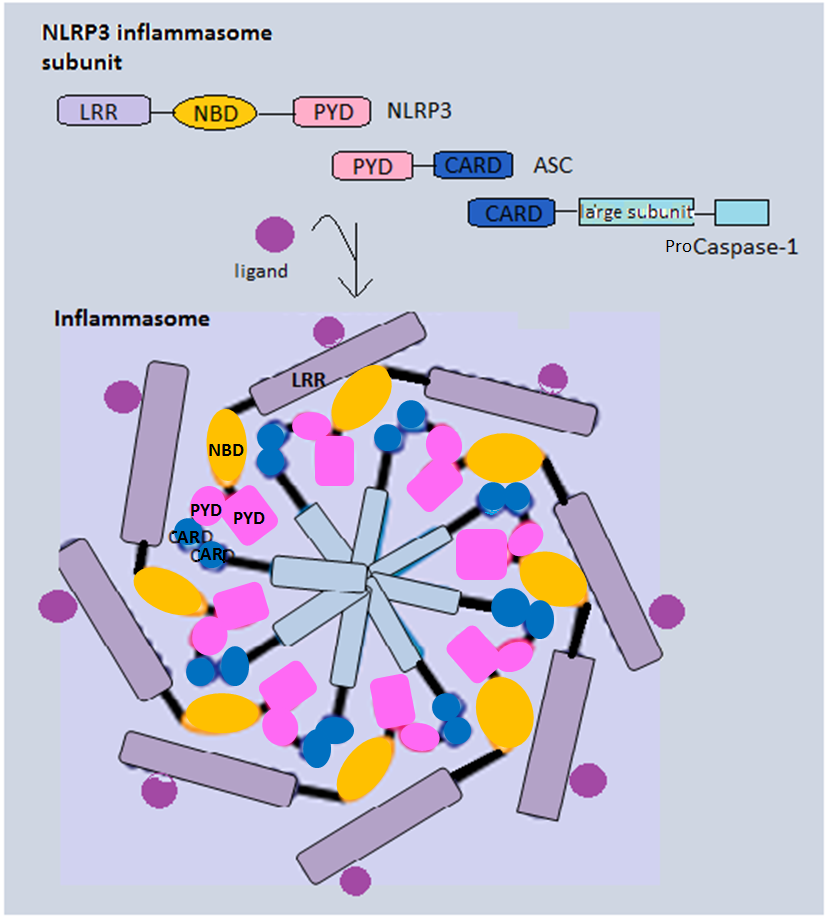
Image: Inflammasome final1.png — Aiyaya (CC BY-SA 3.0), via Wikimedia Commons
Monitoring Inflammation: Biomarkers Worth Knowing
Chronic low-grade inflammation is often asymptomatic until organ-level damage begins. Standard clinical biomarkers can flag elevated baseline inflammation before it progresses to autoimmune disease:
- High-sensitivity CRP (hsCRP): Values above 3 mg/L consistently suggest elevated cardiovascular and autoimmune risk.
- Erythrocyte sedimentation rate (ESR): Non-specific but useful for tracking inflammatory burden over time.
- Anti-nuclear antibodies (ANA): Elevated titres can precede symptomatic autoimmune disease by years.
- Interleukin-6 (IL-6): More sensitive than CRP in some contexts; increasingly available through specialty panels.
- Fasting insulin and HOMA-IR: Insulin resistance both drives and is driven by chronic inflammation—a bidirectional relationship.
We recommend discussing a baseline inflammatory panel with your physician if you have multiple modifiable risk factors, especially with a family history of autoimmune conditions.
Frequently Asked Questions
Can chronic inflammation be reversed once it has started?
In many cases, yes—particularly when caught before autoimmune disease is established. Dietary changes, regular exercise, improved sleep, and gut microbiome support have all been shown to meaningfully reduce inflammatory markers. Once a diagnosable autoimmune condition is present, management becomes more complex and typically requires medical supervision alongside lifestyle measures.
Does taking anti-inflammatory supplements like fish oil or turmeric help?
Omega-3 fatty acids (EPA/DHA) from fish oil have the strongest evidence base among supplements—they measurably reduce circulating triglycerides and modestly lower CRP at therapeutic doses. Curcumin shows anti-inflammatory effects in some clinical studies, but bioavailability is poor without piperine or lipid formulations. Supplements should be viewed as adjuncts to, not replacements for, an anti-inflammatory dietary pattern and lifestyle.
Is the gut microbiome really connected to autoimmune disease risk?
Yes, and the evidence is strengthening rapidly. The gut microbiome influences systemic immune regulation through short-chain fatty acid production, direct signalling through pattern recognition receptors, and modulation of Treg versus Th17 balance. Dysbiosis is consistently associated with higher prevalence of autoimmune conditions including rheumatoid arthritis, lupus, IBD, and multiple sclerosis. The 2026 Gut Microbes research (PMID 42482368) provides mechanistic confirmation that restoring the microbiome can actively improve the immune environment in rheumatoid arthritis.
Bottom Line
Chronic inflammation is not merely uncomfortable—it is a progressive risk factor for autoimmune disease, operating through molecular mechanisms now being mapped in increasing detail. The 2026 research on m6A epitranscriptomics and gut microbiome signalling confirms that the pathways from sustained inflammation to immune self-attack are specific, partially reversible, and partially preventable. We recommend prioritising an anti-inflammatory dietary pattern, protecting gut microbiome diversity, maintaining regular moderate exercise, and addressing sleep and stress as a coordinated strategy. These are not soft lifestyle suggestions; they are evidence-based interventions targeting the molecular machinery that decides whether chronic inflammation stays contained or tips into autoimmune disease.
Sources & References:
Epitranscriptomic regulation by m6A in immunity and autoimmune disorders — Frontiers in Immunology (2026)
Probiotic Lactobacillus casei improves immune microenvironment in rheumatoid arthritis via gut microbiota-butyrate-HDAC/NF-κB signaling — Gut Microbes (2026)
Disclaimer: This article is for informational purposes only and does not constitute medical advice. Always consult a qualified healthcare professional before making health decisions.