
Insulin resistance affects an estimated one in three adults in the United States and is the metabolic foundation of type 2 diabetes, non-alcoholic fatty liver disease, and cardiovascular disease. The encouraging news from recent research: the condition responds powerfully to dietary change. A 2026 systematic review and meta-analysis (PMID 42393878) found that low glycemic index (GI) diets produced statistically significant improvements in fasting glucose and lipid profiles across diverse global populations. A separate 2026 review (PMID 42591408) catalogued specific bioactive compounds in food — including polyphenols, omega-3 fatty acids, and dietary fiber — that target insulin signaling pathways at the cellular level. Together, these papers confirm that food is not merely supportive therapy for insulin resistance; it is the primary intervention.

Image: Healthy Lentil Salad (Unsplash) — James Sutton (CC0), via Wikimedia Commons
What Is Insulin Resistance and Why Does Diet Matter?
Insulin is the hormone that signals cells to absorb glucose from the bloodstream. When cells stop responding efficiently, the pancreas compensates by producing more insulin. Over time, chronically elevated insulin levels drive fat storage, inflammation, and eventually pancreatic exhaustion. The result is pre-diabetes and, without intervention, type 2 diabetes.
Diet matters because glucose load — how much glucose enters the bloodstream and how fast — is the primary driver of insulin demand. Every meal either trains cells toward better sensitivity or deepens the resistance. Foods that release glucose slowly, carry anti-inflammatory compounds, and feed beneficial gut bacteria all reduce the insulin burden over time.
The Low Glycemic Index Framework
The glycemic index (GI) ranks foods by how quickly they raise blood glucose compared to pure glucose (GI = 100). The 2026 meta-analysis (PMID 42393878) confirmed that consistently eating low-GI foods produces meaningful reductions in HbA1c (a three-month average blood glucose marker) and LDL cholesterol. Importantly, the effect held across South Asian, East Asian, Western, and African dietary patterns — suggesting the GI principle is not population-specific.
Specific Foods With Strong Evidence
Legumes and Lentils
Legumes — lentils, chickpeas, black beans, kidney beans — sit at the bottom of the glycemic index (GI 20–40) and deliver a triple benefit: slow-digesting starch, soluble fiber that slows glucose absorption, and plant protein that promotes satiety without spiking insulin. Lentils in particular are among the most studied foods for blood sugar management, with consistent results across clinical trials.
Non-Starchy Vegetables
Leafy greens, broccoli, cauliflower, bell peppers, and zucchini are virtually free of digestible starch. They provide magnesium (critical for insulin receptor signaling) and chromium (which enhances glucose uptake), and add volume and fiber to meals without glycemic cost. Building at least half of each plate from non-starchy vegetables is a foundational strategy.
Whole Grains Over Refined
Whole oats, barley, quinoa, and whole wheat have significantly lower GI values than refined equivalents because the intact bran and germ matrix slows starch digestion. Barley deserves special mention: it is exceptionally high in beta-glucan, a soluble fiber that forms a viscous gel in the gut, dramatically slowing glucose absorption.
Fatty Fish and Omega-3 Sources
The 2026 bioactives review (PMID 42591408) highlighted omega-3 polyunsaturated fatty acids (EPA and DHA, found in salmon, mackerel, sardines, and anchovies) as compounds that directly modulate insulin signaling. Omega-3s reduce inflammatory cytokines — particularly TNF-α and IL-6 — that interfere with insulin receptor function and promote glucose uptake in muscle cells. Two to three servings of fatty fish per week is the well-established recommendation.
Polyphenol-Rich Foods
Polyphenols — abundant in berries, dark chocolate (≥70% cacao), green tea, olive oil, and colorful vegetables — were identified in the 2026 bioactives review as a major category of compounds with anti-insulin-resistance activity. They reduce oxidative stress that damages insulin receptors, inhibit intestinal glucose absorption, and stimulate GLP-1 (a hormone that enhances insulin secretion in a glucose-dependent manner). Blueberries in particular have been studied in multiple randomized controlled trials with positive results.
Vinegar and Fermented Foods
Acetic acid — the active compound in apple cider vinegar — has a well-documented glucose-lowering effect when consumed before high-carbohydrate meals. It slows gastric emptying and inhibits salivary amylase, an enzyme that breaks starch into glucose. Fermented foods (kimchi, kefir, plain yogurt, sauerkraut) also contribute by supporting gut microbiome diversity, which is increasingly linked to improved insulin sensitivity.
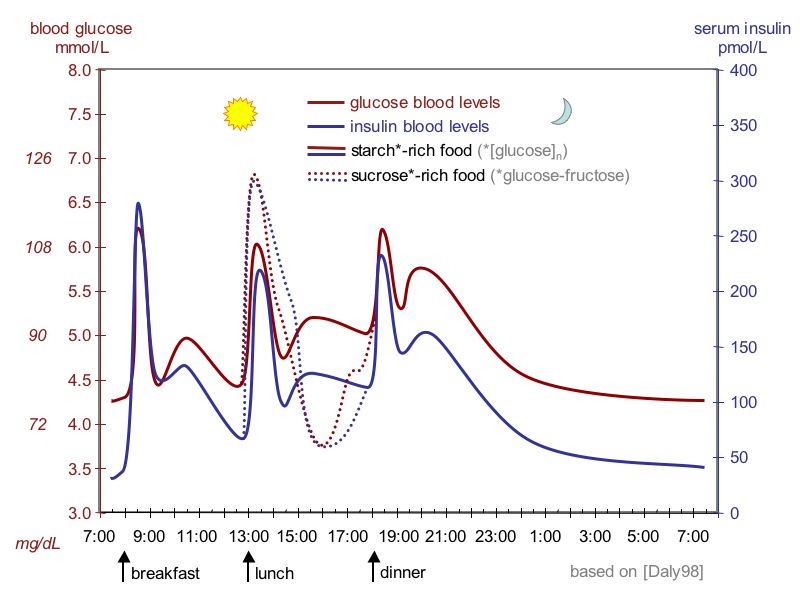
Image: Suckale08 fig3 glucose insulin day — Jakob Suckale, Michele Solimena (CC BY-SA 3.0), via Wikimedia Commons
Foods to Minimize or Avoid
- Refined carbohydrates and added sugars: White bread, white rice, sugary beverages, pastries, and most breakfast cereals cause rapid glucose spikes and demand large insulin responses. They are the primary dietary contributors to insulin resistance.
- Ultra-processed foods: These typically combine high-GI carbohydrates with refined seed oils that promote inflammation. Processing destroys the fiber matrix that would otherwise slow glucose absorption.
- Trans fats: Directly impair insulin receptor function at the cellular level. Still present in some imported processed foods despite bans in many countries.
- Excess alcohol: Disrupts liver glucose regulation and, with chronic use, increases visceral fat — one of the strongest drivers of insulin resistance.
Practical Meal Architecture for Insulin Sensitivity
| Meal Component | Best Choices | Why It Helps |
|---|---|---|
| Half the plate | Non-starchy vegetables | Near-zero glucose load; provides fiber and micronutrients |
| Protein (quarter plate) | Fish, legumes, eggs, Greek yogurt | Slows gastric emptying; promotes satiety; low GI |
| Carbohydrate (quarter plate) | Lentils, barley, oats, sweet potato | Low GI; high fiber; blunts post-meal glucose spike |
| Fat source | Extra-virgin olive oil, avocado, nuts | Further slows glucose absorption; anti-inflammatory |
| Drink | Water, green tea, unsweetened coffee | No glucose load; green tea polyphenols are beneficial |
Frequently Asked Questions
How long does dietary change take to improve insulin resistance?
Measurable improvements in fasting glucose and insulin sensitivity can appear within two to four weeks of consistent dietary change, particularly when high-GI foods are substantially replaced with low-GI alternatives. HbA1c — which reflects a three-month average — takes at least three months to show significant change. Full metabolic improvement may take six to twelve months of sustained dietary pattern change.
Do I need to count calories or just improve food quality?
The research, including the 2026 meta-analysis, shows that improving food quality — specifically GI and glycemic load — produces benefits even without explicit caloric restriction. That said, many people with insulin resistance also carry excess visceral fat, and some caloric deficit accelerates reversal. We recommend prioritizing food quality first; caloric reduction often follows naturally as fiber-rich, protein-adequate meals reduce hunger.
Are fruit sugars safe with insulin resistance?
Whole fruit is generally safe and beneficial. The fiber in whole fruit dramatically slows fructose and glucose absorption compared to juice. Berries, apples, pears, and citrus are particularly good choices — low GI, high polyphenol content. Mangoes, pineapple, and overripe bananas have higher GI values and are best consumed in smaller portions. Fruit juice, even 100% juice, removes the fiber buffer and should be minimized.
Bottom Line
Insulin resistance is not a fixed state. It is a reversible metabolic condition that responds directly to what you eat. The 2026 evidence base is clear: a dietary pattern built around low-GI carbohydrates (legumes, whole grains, non-starchy vegetables), omega-3-rich protein sources, polyphenol-dense foods, and healthy fats creates the biochemical conditions for cells to recover insulin sensitivity. We recommend starting systematically — swap refined grains for legumes and add a serving of non-starchy vegetables at each meal — rather than waiting for a wholesale overhaul. The metabolism responds to each meal, and improvement begins with the next plate.
Sources & References:
Low Glycemic Index Diets on Glycemic and Lipid Control Across Diverse Populations: A Systematic Review and Meta-Analysis. (2026, Jul 1). PMID 42393878.
Dietary bioactive compounds targeting insulin resistance: mechanisms and preventive potential. (2026). PMID 42591408.
Disclaimer: This article is for informational purposes only and does not constitute medical advice. Always consult a qualified healthcare professional before making health decisions.