
Cortisol, the body's primary stress hormone, is essential for survival — but a growing body of research shows that chronically elevated cortisol quietly dismantles hormonal balance, immune function, and even cognitive health. A 2024 systematic review and meta-analysis found that targeted stress management interventions — from mindfulness training to resistance exercise — produce statistically significant reductions in cortisol levels, confirming that lifestyle changes are among the most evidence-backed tools we have for rebalancing hormones disrupted by chronic stress.
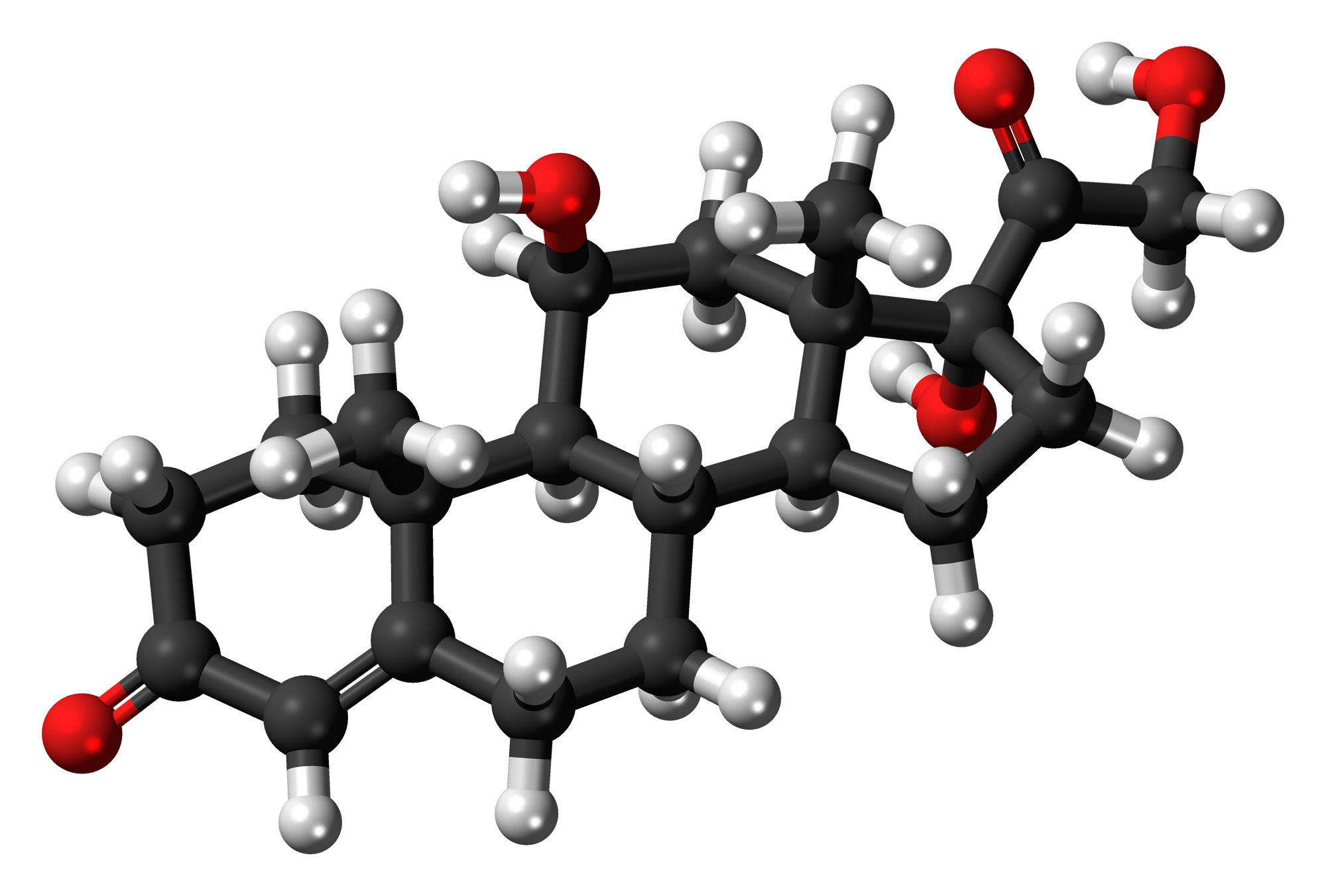
Image: Cortisol-3D-balls-2.png — Jynto (CC0), via Wikimedia Commons
What Cortisol Actually Does in the Body
Cortisol is a glucocorticoid hormone produced by the adrenal cortex in response to signals from the hypothalamic-pituitary-adrenal (HPA) axis. In acute bursts, it performs several vital functions: it mobilizes glucose for immediate energy, sharpens alertness and reaction time, modulates acute immune responses, and temporarily raises blood pressure to move blood to major muscle groups. This is the system that kept our ancestors alive when confronted with physical threats.
The problem arises when cortisol stays elevated for days, weeks, or months. Sustained HPA-axis activation — triggered by workplace pressure, poor sleep, financial stress, relationship conflict, or ongoing trauma — pushes the body into a state of chronic biological alarm. Testosterone, estrogen, progesterone, DHEA, and thyroid hormones all sit downstream of this alarm system and get disrupted in the process. What begins as adaptive survival physiology becomes a slow-moving hormonal catastrophe.
How Chronic Stress Cascades Through the Entire Endocrine System
The hormonal disruption caused by chronic stress is not isolated to one or two hormones — it cascades through the entire endocrine system via several overlapping pathways.
Testosterone suppression: Chronic cortisol elevation directly inhibits the hypothalamic release of gonadotropin-releasing hormone (GnRH), which signals the testes to produce testosterone. This is why sustained high stress is consistently associated with lower testosterone in men — fatigue, reduced libido, and diminished capacity to build lean muscle all follow naturally from this suppression. The relationship is bidirectional: low testosterone also impairs stress resilience, creating a reinforcing cycle.
The pregnenolone diversion: Both cortisol and sex hormones (progesterone, DHEA, testosterone, estrogen) share the same biosynthetic precursor: pregnenolone. Under chronic stress, the body preferentially shunts pregnenolone toward cortisol production at the expense of downstream sex hormones. For women, this frequently manifests as menstrual irregularities, worsened PMS symptoms, and fertility challenges. For men, it compounds the testosterone suppression described above.
Thyroid suppression: Elevated cortisol reduces the conversion of T4 (the inactive storage form of thyroid hormone) to T3 (the active, metabolically potent form). This creates functional hypothyroidism even when standard TSH lab values appear within normal range — which is why chronically stressed individuals frequently experience fatigue, weight gain, and cognitive fog that standard thyroid panels fail to explain.
Insulin resistance acceleration: As part of the fight-or-flight response, cortisol raises blood glucose to fuel immediate action. Chronically elevated cortisol means chronically elevated blood glucose, which compels repeated insulin secretion. Over time, this promotes insulin resistance and meaningfully raises risk for type 2 diabetes and metabolic syndrome — independent of diet.
The HPA Axis, Autoimmunity, and Long-Term Consequences
A 2025 review examining the relationship between chronic stress, HPA axis dysfunction, and autoimmunity found that cortisol dysregulation creates a physiological paradox: while short-term cortisol appropriately suppresses acute immune responses, chronically abnormal cortisol rhythms — particularly the flattened diurnal patterns seen in long-term stress — can actually drive immune dysregulation. This mechanism is believed to contribute to elevated risk of autoimmune conditions, including rheumatoid arthritis, lupus, and inflammatory bowel disease, in chronically stressed individuals.
The key concept here is the cortisol diurnal curve. In healthy individuals, cortisol follows a predictable daily rhythm: highest in the first 30–45 minutes after waking (the cortisol awakening response), then gradually declining through the day, reaching its lowest point around midnight. Chronic stress erodes this rhythm, leaving cortisol abnormally elevated in the evening and blunted in the morning. This inverted pattern disrupts sleep architecture, worsens systemic inflammation, and further suppresses sex hormone production — compounding every pathway described above.
Stress Management Strategies With Real Evidence Behind Them
A 2024 systematic review and meta-analysis (PMID 37879237) analyzing stress management interventions across multiple controlled study designs found several approaches that produce statistically significant reductions in measured cortisol levels — not just self-reported stress. The following are the most consistently evidence-supported:
Mindfulness-Based Stress Reduction (MBSR): Structured 8-week MBSR programs consistently demonstrate cortisol-lowering effects in randomized controlled trials. A 2017 meta-analysis examining yoga and MBSR found significant reductions in stress-related physiological markers including salivary cortisol, blood pressure, and heart rate variability. These programs work by training the prefrontal cortex to down-regulate amygdala-driven stress responses — building a measurable neurological brake on HPA axis reactivity over time.
Resistance and aerobic exercise: Moderate exercise produces a short-term cortisol spike (an appropriate acute response), followed by sustained reduction in baseline cortisol over weeks of consistent training. Resistance training is particularly valuable for men because it simultaneously stimulates testosterone production — directly counteracting stress-driven hormonal suppression. The important caveat: extreme training volumes and overtraining chronically elevate cortisol rather than reducing it.
Sleep extension and quality improvement: Sleep is the primary biological window during which the HPA axis downregulates. Insufficient sleep (under 7 hours) is one of the fastest and most reliable pathways to elevated next-day cortisol. Prioritizing sleep duration and quality — consistent bedtimes, a dark and cool room, no screens in the hour before bed — is arguably the single highest-leverage cortisol intervention available and requires no supplementation or expensive protocols.
Social connection and reducing chronic stressors: Loneliness is a documented chronic stressor with measurable HPA-axis effects. Research consistently links robust social connection, community engagement, and a perceived sense of purpose to lower baseline cortisol and healthier diurnal cortisol rhythms. These are not soft lifestyle factors — they carry concrete endocrine consequences that rival the effects of pharmacological interventions in several studies.

Image: JMRC Soldier 360 yoga2 30Mar2011 (5598158314).jpg — U.S. Army Europe (CC BY 2.0), via Wikimedia Commons
Practical Habit Comparison: What to Prioritize First
| Intervention | Primary Mechanism | Time to Measurable Effect |
|---|---|---|
| 7–9 hours quality sleep | Restores cortisol diurnal rhythm | Days to weeks |
| Resistance training 3x/week | Lowers baseline cortisol; raises testosterone | 6–12 weeks |
| 8-week MBSR program | Down-regulates HPA axis reactivity | 4–8 weeks |
| Eliminating caffeine after noon | Prevents evening cortisol spike and sleep disruption | 1–2 weeks |
| Anti-inflammatory diet | Reduces systemic inflammation supporting HPA recovery | 4–8 weeks |
| Active social connection | Reduces perceived threat; normalizes HPA baseline tone | Variable |
Frequently Asked Questions
How do I know if my cortisol is chronically elevated?
Common signs include persistent fatigue despite adequate sleep, difficulty losing abdominal fat, waking between 2–4 am, low libido, slow recovery from exercise, heightened anxiety and irritability, and frequent illness from immune suppression. Standard blood cortisol tests taken at a single point in time miss the diurnal pattern that matters most for chronic stress assessment. A 4-point salivary cortisol test — measuring at waking, noon, late afternoon, and evening — provides a far more clinically useful picture of cortisol rhythm and HPA function.
Can supplements like ashwagandha actually lower cortisol?
Ashwagandha (Withania somnifera) is the most well-researched adaptogen for cortisol modulation, with multiple randomized controlled trials showing statistically significant reductions in serum cortisol versus placebo in chronically stressed adults. Phosphatidylserine (400–800mg/day), L-theanine, and magnesium glycinate also have supporting evidence for reducing stress response magnitude. However, all of these work best as adjuncts to structural lifestyle changes — not as standalone fixes. Supplements cannot compensate for 6 hours of sleep, excessive caffeine, or a chronically stressful environment that has never been addressed.
Is chronic stress-related hormonal disruption reversible?
Yes, and often substantially so. The endocrine system is highly responsive to environmental inputs, and the research shows that measurable hormone improvements follow within weeks to months of consistent intervention. Testosterone levels in men typically begin recovering within 6–12 weeks of reduced chronic stress combined with adequate sleep and resistance training. Thyroid conversion improves as cortisol normalizes. Menstrual cycle regularity in women often improves within 2–3 cycles of sustained lifestyle changes. The caveat is that reversibility assumes no additional underlying pathology — if hormonal disruption is severe or has persisted for years, working with an endocrinologist for baseline testing is worthwhile.
Bottom Line
Chronic stress is not simply a mental health inconvenience — it is a documented endocrine disruptor that reshapes cortisol rhythms, suppresses testosterone and sex hormones, impairs thyroid conversion, promotes insulin resistance, and raises autoimmune risk through HPA axis dysregulation. The research is clear that this is reversible. MBSR programs, consistent moderate exercise, sleep extension, and structural reduction of chronic stressors all produce measurable cortisol reductions backed by peer-reviewed evidence. We recommend treating stress management with the same clinical seriousness as diet, exercise, and medication — because at the hormonal level, they are inseparable from one another.
Sources & References:
Effectiveness of stress management interventions to change cortisol levels: a systematic review and meta-analysis — PubMed (2024)
Chronic Stress and Autoimmunity: The Role of HPA Axis and Cortisol Dysregulation — PubMed (2025)
Yoga, mindfulness-based stress reduction and stress-related physiological measures: A meta-analysis — PubMed (2017)
Disclaimer: This article is for informational purposes only and does not constitute medical advice. Always consult a qualified healthcare professional before making health decisions.