
When a deadline looms, a conflict erupts, or a threat feels imminent, your hypothalamus fires a chemical signal that cascades through your pituitary gland and down to your adrenal glands—releasing cortisol within minutes. This hypothalamic-pituitary-adrenal (HPA) axis is one of the body's most ancient survival circuits, and a 2026 study in Frontiers in Immunology confirmed that workers in chronically high-stress environments show significantly elevated cortisol paired with disrupted cytokine-chemokine profiles, meaning the immune system is being actively reshaped by ongoing stress exposure (Serrano-Ibáñez et al., 2026). Understanding why this happens—and what you can do about it—is essential for protecting your long-term health.

Image: Noninvasive cortisol biomarker monitoring using a wearable aptamer-field-effect transistor sensing system — Wang, Zhao et al. (CC BY 4.0), via Wikimedia Commons
How the HPA Axis Triggers Cortisol Release
The stress response begins in the hypothalamus, a small region deep in the brain that acts as the body's command center. When it detects a threat—physical, emotional, or psychological—it releases corticotropin-releasing hormone (CRH). CRH tells the pituitary gland to secrete adrenocorticotropic hormone (ACTH), which then travels through the bloodstream to the adrenal glands, two small structures perched atop the kidneys. The adrenal cortex responds by synthesizing and releasing cortisol into circulation.
Under normal circumstances, this feedback loop is self-regulating: rising cortisol levels signal the hypothalamus and pituitary to dial back CRH and ACTH, returning cortisol to baseline within an hour or two. The problem arises when the stressor never goes away—traffic jams, financial worry, relationship tension, and relentless work pressure all keep the HPA axis in a low-grade state of alert. Over time, this sustained activation blunts the feedback mechanism and leads to chronically elevated cortisol.
What High Cortisol Actually Does to Your Body
Cortisol is not inherently harmful—it is essential for waking up in the morning (cortisol peaks shortly after you rise), mobilizing glucose for energy, modulating inflammation, and supporting immune function. The damage comes from sustained elevation over weeks and months:
- Blood sugar disruption: Cortisol triggers gluconeogenesis, forcing the liver to manufacture glucose even when you are not eating. Over time, this contributes to insulin resistance and elevated fasting glucose.
- Immune suppression: Short-term, cortisol is anti-inflammatory. Chronically elevated, it disrupts cytokine balance—as confirmed in the 2026 Frontiers in Immunology study of emergency service personnel—making you more vulnerable to infections and slowing tissue repair.
- Sleep architecture damage: Cortisol and melatonin operate on opposing rhythms. High evening cortisol delays melatonin release, reduces deep sleep, and creates a vicious cycle where poor sleep itself raises cortisol the next day.
- Visceral fat accumulation: Cortisol promotes fat storage specifically around the abdomen, where it is metabolically most harmful and most strongly linked to cardiovascular disease risk.
- Cognitive impairment: Sustained cortisol exposure can reduce hippocampal volume over time, impairing memory consolidation and emotional regulation.
- Cardiovascular strain: High cortisol elevates blood pressure and heart rate, increasing cumulative wear on arterial walls.
The Six Most Common Triggers of High Cortisol
Knowing your specific cortisol triggers is the first step toward managing them effectively. Research consistently identifies these categories:
| Trigger | Mechanism | Evidence Strength |
|---|---|---|
| Sleep deprivation | Disrupts circadian HPA regulation | Strong |
| Chronic psychological stress | Direct HPA axis activation via CRH | Strong (confirmed 2026) |
| Excessive high-intensity exercise | Physical stressor activates same HPA pathway | Moderate |
| Pathological hypercortisolism (Cushing's) | Tumor-driven adrenal overproduction | Strong (clinical) |
| High sugar / refined carbohydrate diet | Blood glucose swings activate cortisol counter-response | Moderate |
| Chronic inflammation | Inflammatory cytokines activate HPA axis feedback | Moderate–strong |
A 2026 clinical review in Diabetes, Obesity & Metabolism also highlighted that pathological hypercortisolism (Cushing's syndrome) is significantly underdiagnosed: many people presenting with persistent cortisol elevation, metabolic symptoms, and treatment-resistant hypertension are never evaluated for this treatable condition (Frias, 2026). If lifestyle interventions do not bring relief after several months, a clinical evaluation is warranted.
The Cortisol-Adrenaline Timing Difference
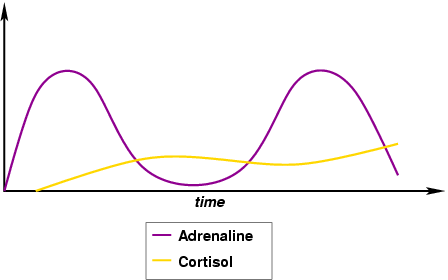
Image: Demystifying Depression-Cortisol — Name of Feather at English Wikibooks (CC BY-SA 3.0), via Wikimedia Commons
One of the most clinically useful distinctions to understand is the timing difference between adrenaline (epinephrine) and cortisol. Adrenaline hits fast—within seconds of a perceived threat—and dissipates within minutes once the threat passes. Cortisol rises more slowly, typically peaking 15–30 minutes after a stressor, and it lingers for hours.
This is why you can feel physically calm after a difficult meeting yet remain unable to sleep hours later. The adrenaline rush has long passed, but cortisol continues circulating, keeping your nervous system in a state of quiet readiness. Recognizing this pattern explains why stress-reduction interventions need to extend well beyond the acute stressor—deep breathing during the event is helpful, but so is a calm evening routine, early dinner, and avoiding screens that can restimulate the stress response before bed.
Evidence-Based Strategies to Lower Cortisol
The following approaches have the most consistent peer-reviewed support for reducing chronic cortisol elevation:
Prioritize sleep consistency above all else. Cortisol follows a strong circadian rhythm—healthy levels are highest around 8 a.m. and lowest near midnight. Consistent sleep and wake times, even on weekends, reinforce this rhythm and prevent HPA dysregulation. Treating insomnia with CBT-I (cognitive behavioral therapy for insomnia) has demonstrated cortisol-lowering effects in randomized trials.
Practice slow, diaphragmatic breathing daily. Deliberate slow breathing (approximately 5–6 breaths per minute) activates the vagus nerve and parasympathetic nervous system, directly dampening the HPA axis. Even 10–15 minutes daily shows measurable effects on evening cortisol within weeks.
Choose moderate over intense exercise. While high-intensity training temporarily spikes cortisol (it is a physical stressor), moderate aerobic activity—30–45 minutes of brisk walking, cycling, or swimming—consistently reduces baseline cortisol over time. Avoid chronically high training volumes without adequate recovery days, which can produce a state of overtraining that keeps cortisol elevated.
Stabilize blood sugar through diet. Blood glucose swings activate the same HPA pathway as psychological stress. A whole-food, high-fiber diet that avoids ultra-processed carbohydrates reduces cortisol fluctuations throughout the day. Eating breakfast—particularly one containing protein and fat—helps establish the morning cortisol peak and reduces mid-morning spikes.
Spend time outdoors. Forest bathing (shinrin-yoku) and time in green spaces have been shown to lower salivary cortisol in multiple controlled studies, with measurable effects appearing within 20–30 minutes. Even window views of nature or brief outdoor breaks during the workday produce small but real reductions.
Address social connection intentionally. Loneliness and social isolation are among the most potent HPA activators in humans. Positive social interaction releases oxytocin, which directly inhibits cortisol release at the hypothalamic level. Regular, quality social connection is not optional for stress regulation—it is biological infrastructure.
Frequently Asked Questions
What are the most common physical signs of chronically high cortisol?
The most recognizable signs include unexplained weight gain around the abdomen and face, persistent fatigue despite adequate sleep, frequent infections due to immune suppression, elevated blood pressure, difficulty concentrating, irregular menstrual cycles in women, low libido in both sexes, and slow wound healing. These symptoms overlap with many other conditions, which is why testing and professional evaluation matter rather than self-diagnosis based on symptoms alone.
Does caffeine raise cortisol levels?
Yes. Caffeine stimulates release of both adrenaline and cortisol by activating the adrenal glands. Regular caffeine consumers develop some tolerance to the acute cortisol-raising effect, but the timing of consumption still matters significantly. Caffeine consumed within 6 hours of bedtime can delay sleep onset and interfere with the overnight cortisol recovery that the body depends on. Many sleep and stress researchers suggest delaying the first cup of coffee until 90–120 minutes after waking, when the natural morning cortisol peak is beginning to decline.
When should I see a doctor about high cortisol?
Seek evaluation if you have persistent symptoms (unexplained weight gain, extreme fatigue, high blood pressure, skin changes) that do not improve after 2–3 months of consistent lifestyle changes, or if your symptoms are severe enough to significantly affect daily function. A physician can order 24-hour urinary free cortisol, late-night salivary cortisol, or morning serum cortisol to assess your levels. These tests, interpreted in context, can determine whether a medical cause such as Cushing's syndrome requires treatment—which the 2026 clinical guide in Diabetes, Obesity & Metabolism confirms is both treatable and frequently overlooked.
Bottom Line
Cortisol is not your enemy—it is a hormone doing exactly what evolution designed it to do. The problem is a modern environment that keeps the alarm bell ringing continuously, without the natural resolution through physical action that our ancestors' stressors provided. We recommend a layered approach: restore consistent sleep above all else, add daily moderate movement, stabilize blood sugar through diet, and build in at least one deliberate nervous-system-calming practice every day. If symptoms persist despite these changes, partner with a clinician to rule out a treatable medical cause before concluding the answer is simply more willpower. Chronic high cortisol is a physiology problem—and it has real solutions.
Sources & References:
Serrano-Ibáñez ER et al. "Cortisol-CX(3)CL1 association and altered cytokine-chemokine profiles in emergency medical services personnel." Frontiers in Immunology 17 (2026). PMID 42500658
Frias JP. "Is Hypercortisolism Treatable? Which Patients Should Be Treated and How—A Practical Guide for Clinicians." Diabetes, Obesity & Metabolism (2026). PMID 42533758
Disclaimer: This article is for informational purposes only and does not constitute medical advice. Always consult a qualified healthcare professional before making health decisions.