
Vitamin D deficiency is one of the most widespread nutritional shortfalls in modern medicine — and one of the most routinely overlooked. A landmark 2022 expert consensus statement published in Nutrients by Pludowski and colleagues outlined comprehensive clinical practice guidelines for the prevention, diagnosis, and treatment of vitamin D deficiency, underscoring just how pressing this problem has become across all age groups and climates.
Unlike most vitamins, vitamin D functions more like a hormone than a traditional dietary nutrient. Its active form, calcitriol (1,25-dihydroxyvitamin D), regulates hundreds of genes involved in calcium absorption, immune defense, nerve function, and cell growth. When levels fall short, the consequences ripple through virtually every organ system in the body.
What Is Vitamin D and Why Does It Matter?
Vitamin D is a fat-soluble prohormone that exists in two main dietary forms: vitamin D2 (ergocalciferol, found in fungi) and vitamin D3 (cholecalciferol, found in fatty fish, egg yolks, and liver). When ultraviolet-B (UVB) radiation from sunlight strikes the skin, it converts 7-dehydrocholesterol into previtamin D3, which is then processed by the liver and kidneys into biologically active calcitriol.
Calcitriol's most critical roles include:
- Promoting intestinal absorption of calcium and phosphorus
- Supporting bone mineralization and preventing rickets in children and osteomalacia in adults
- Modulating immune cell activity and reducing susceptibility to respiratory infections
- Supporting muscle function and neuromuscular coordination
- Influencing mood-regulating pathways in the brain
The Main Causes of Vitamin D Deficiency
Deficiency rarely results from a single factor. The most common contributors stack up quietly:
- Limited sun exposure: Indoor lifestyles, office work, or consistent sunscreen use all reduce UVB exposure. Living above 37° north latitude means winters offer insufficient UVB for cutaneous synthesis regardless of time spent outside.
- Darker skin tone: Higher melanin content reduces the skin's ability to produce vitamin D from sunlight, requiring longer sun exposure to synthesize adequate amounts.
- Older age: The skin's capacity to synthesize vitamin D decreases significantly with age, and older adults have reduced kidney efficiency in activating vitamin D.
- Obesity: As a fat-soluble vitamin, vitamin D is sequestered in adipose tissue, reducing its bioavailability in the bloodstream.
- Malabsorption disorders: Crohn's disease, celiac disease, and short bowel syndrome impair the absorption of fat-soluble vitamins from the gut.
- Certain medications: Anticonvulsants, glucocorticoids, and some antifungal medications accelerate the hepatic breakdown of vitamin D.
Recognizing the Warning Signs and Symptoms
Vitamin D deficiency often develops gradually and silently. Many people have no obvious symptoms until levels fall severely. Those who do notice effects commonly report:
- Persistent fatigue and low energy — often dismissed as general tiredness or stress
- Bone and muscle pain — particularly in the back, hips, or legs; frequently mistaken for arthritis or fibromyalgia
- Frequent illness — vitamin D plays a direct role in immune cell function, and low levels are associated with increased susceptibility to respiratory infections
- Mood changes and depression — vitamin D receptors are found throughout the brain and deficiency has been linked to low mood and seasonal affective disorder
- Slow wound healing — vitamin D regulates compounds critical to skin and tissue repair
- Hair thinning — in severe or prolonged deficiency, noticeable hair loss may occur
- Bone deformities — in children, untreated deficiency causes rickets; in adults, osteomalacia causes bone softening and diffuse aching
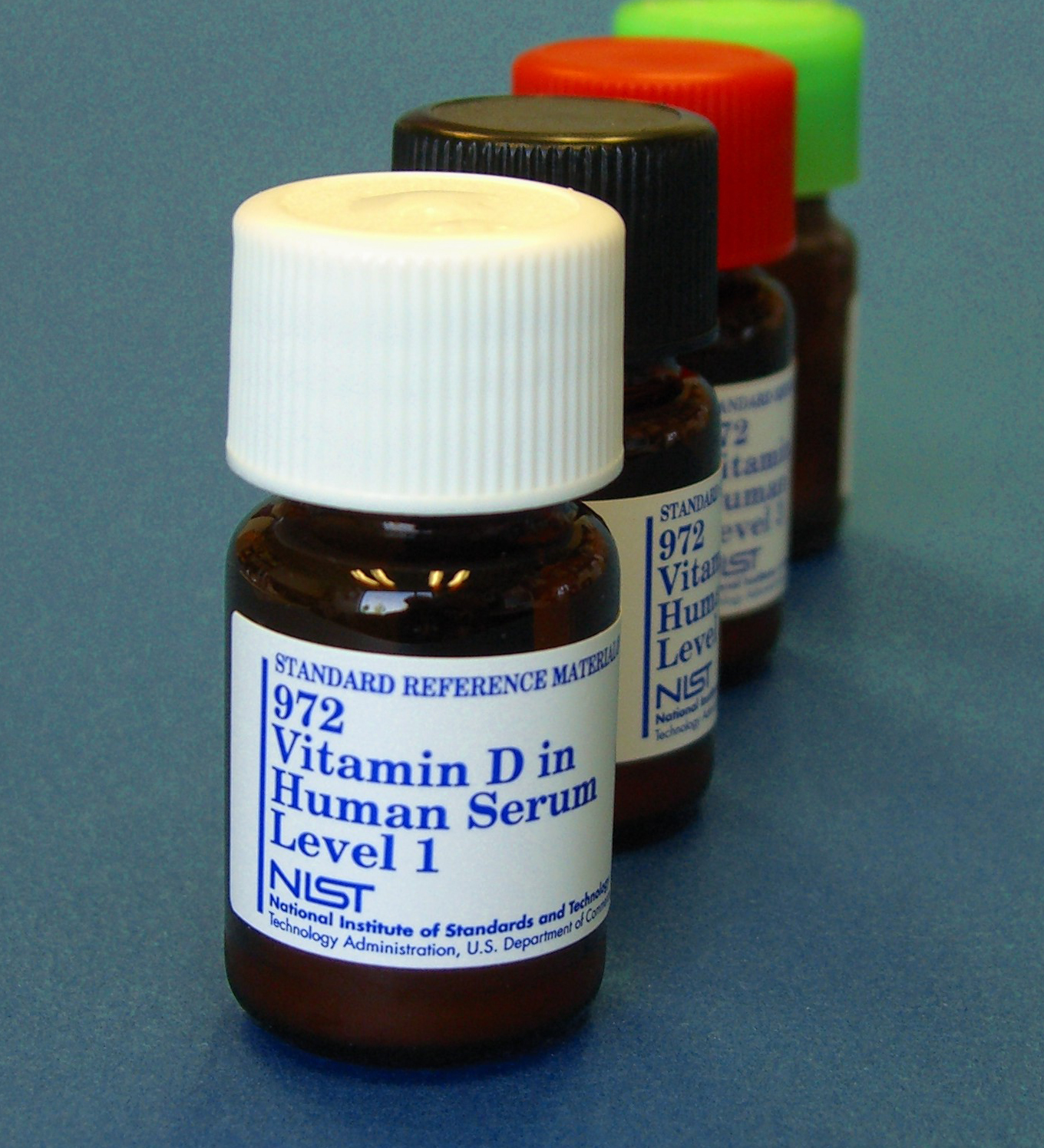
Image: Vitamin D SRM (5941078390) — National Institute of Standards and Technology (Public domain), via Wikimedia Commons
How Vitamin D Deficiency Affects the Body Long-Term
Beyond immediate symptoms, prolonged deficiency is increasingly linked to serious chronic conditions. A 2026 randomized controlled trial published in Medicine (Baltimore) by Anamnart and Kitjarak examined vitamin D supplementation in Parkinson's disease patients, adding to a growing body of evidence that vitamin D's protective role extends well beyond bone health into neurological function.
Longer-term associations observed in population research include:
- Elevated fracture risk and progressive osteoporosis
- Associations with certain autoimmune conditions
- Links to cardiovascular risk markers in some populations
- Connections to depression and cognitive decline in older adults
Many of these are associations rather than proven causal relationships. Correcting confirmed deficiency is evidence-based; supplementing beyond sufficiency has not been shown to prevent these conditions in people who already have adequate levels.
Getting the Right Diagnosis
The standard test for vitamin D status is a blood measurement of 25-hydroxyvitamin D, abbreviated 25(OH)D or calcidiol. This form reflects both dietary intake and skin synthesis, making it the most reliable marker of overall vitamin D status.
Widely accepted clinical thresholds include:
- Deficient: below 20 ng/mL (50 nmol/L) — associated with rickets, osteomalacia, and symptomatic deficiency
- Insufficient: 20–29 ng/mL (50–74 nmol/L) — suboptimal for bone health and immune function
- Sufficient: 30–100 ng/mL (75–250 nmol/L) — adequate for most healthy adults
- Potentially toxic: above 150 ng/mL (375 nmol/L) — rare from diet or sun; a concern only with high-dose unsupervised supplementation
Ask your doctor specifically for the 25(OH)D test. Older panels may measure the active form (1,25-dihydroxyvitamin D) instead, which can appear normal even when total stores are severely depleted.
Evidence-Based Treatment and Supplementation
The 2022 expert consensus by Pludowski and colleagues in Nutrients emphasized that vitamin D3 (cholecalciferol) is generally preferred over vitamin D2 (ergocalciferol) for correction of deficiency, as D3 is more effective at raising and sustaining 25(OH)D concentrations. Treatment typically involves a loading phase to replenish stores, followed by maintenance dosing appropriate to the individual's baseline, body weight, and any underlying conditions. High-dose self-supplementation without monitoring is discouraged because vitamin D is fat-soluble and accumulates to toxic levels over time.
For most adults, major health organizations suggest 600–800 IU per day for maintenance and 800–1,000 IU for those over 70. Correction of confirmed clinical deficiency requires higher doses under medical guidance and a follow-up blood test at 8–12 weeks.
| Source | Typical Vitamin D | Best Use | Key Limitations |
|---|---|---|---|
| Midday sunlight (skin exposure) | Highly variable; potentially thousands of IU per session | Maintenance in summer, lower latitudes | Latitude, season, cloud cover, skin tone, age |
| Fatty fish (salmon, sardines, mackerel) | 400–600 IU per 3 oz serving | Dietary intake, natural D3 source | Insufficient alone to correct deficiency |
| Vitamin D3 supplements | 1,000–5,000+ IU (dose-dependent) | Primary correction strategy; northern latitudes | Requires monitoring to avoid toxicity |
| Fortified foods (milk, cereals, OJ) | 100–400 IU per serving | Baseline population-level intake | Insufficient alone for clinically deficient individuals |
| UV therapy lamps (medical devices) | Variable | Homebound or institutionalized patients | Requires medical guidance; cost |
Optimizing Your Daily Vitamin D Naturally
While supplementation is often necessary for those with confirmed deficiency, several practical habits support healthy vitamin D year-round:
- Prioritize midday sun: UVB rays responsible for vitamin D synthesis are strongest between 10am and 3pm. Even 15–20 minutes of direct arm and leg exposure several times per week is meaningful — without burning.
- Eat vitamin D-rich foods regularly: Wild-caught salmon, canned sardines, UV-exposed mushrooms, egg yolks, and beef liver are among the few foods with meaningful natural vitamin D content.
- Take supplements with a fatty meal: Since vitamin D is fat-soluble, taking supplements alongside a meal containing healthy fats significantly improves intestinal absorption.
- Support the co-factors: Magnesium is required by the enzymes that activate vitamin D. Vitamin K2 helps direct calcium — which vitamin D helps absorb — into bones rather than soft tissues.
- Test annually if you have risk factors: Living at a northern latitude, having darker skin, being over 60, or spending most time indoors all warrant an annual 25(OH)D check.
Frequently Asked Questions
Can you get too much vitamin D from supplements?
Yes, though toxicity is rare and cannot result from sun exposure alone — the skin has a natural self-regulating mechanism. Toxicity most commonly occurs from very high supplemental doses taken over extended periods without monitoring. Symptoms include nausea, excessive thirst, frequent urination, weakness, and elevated blood calcium. Always confirm your blood levels before starting high-dose supplementation and retest after 8–12 weeks.
Which is better — vitamin D2 or D3?
The evidence consistently favors vitamin D3 (cholecalciferol). D3 is more potent, raises blood 25(OH)D concentrations more effectively, and sustains higher levels after stopping supplementation compared to D2. D3 is also the form produced naturally in human skin. Vegans can now find plant-sourced D3 derived from algae or lichen rather than the traditional lanolin (sheep's wool) source.
How long does it take to correct vitamin D deficiency?
With a targeted supplementation protocol, most people see meaningful improvements in blood 25(OH)D levels within 8–12 weeks. Those with severe deficiency, obesity, or malabsorption conditions may take considerably longer. A follow-up blood test at the end of a loading protocol is essential to confirm replenishment before stepping down to a maintenance dose.
The Bottom Line
Vitamin D deficiency is both common and consequential — yet also one of the most straightforward nutritional problems to identify and address. We recommend getting a baseline 25(OH)D blood test if you have any risk factors or unexplained persistent symptoms. If levels are low, work with a healthcare provider to establish a targeted plan using vitamin D3, complemented by sensible sun exposure and vitamin D-rich foods. The evidence is clear: correcting vitamin D status is a high-return investment in long-term bone health, immune resilience, neurological function, and overall wellbeing.
Sources & References:
Pludowski P, et al. "Clinical Practice in the Prevention, Diagnosis and Treatment of Vitamin D Deficiency: A Central and Eastern European Expert Consensus Statement." Nutrients. 2022 Apr 2;14(7):1483. PMID: 35406098
Anamnart C, Kitjarak R. "Effect of vitamin D supplementation on clinical outcomes of patients with Parkinson disease: A randomized controlled study." Medicine (Baltimore). 2026 Jul 24;105(30):e49931. PMID: 42499083
Disclaimer: This article is for informational purposes only and does not constitute medical advice. Always consult a qualified healthcare professional before making health decisions.