
After 30, cognitive performance doesn't decline overnight — but the groundwork for brain health decades later is laid in the daily food choices we make right now. A 2025 systematic review found that dietary diversity is consistently and meaningfully associated with better cognitive performance across multiple domains, including memory, executive function, and processing speed (PMID 40188075). The research is clear: variety and quality of diet matter for the brain throughout adult life — and the 30s are not too early to act on that.
Why Brain Nutrition Shifts After 30
The human brain begins subtle structural changes well before what most people consider "middle age." Starting in the early to mid-30s, small shifts in synaptic density, neurotransmitter efficiency, and inflammatory response begin accumulating. These aren't dramatic — but they're real, and they're shaped significantly by the nutritional environment we create through daily eating.
Key mechanisms at play include:
- Neuroinflammation: Low-grade, chronic inflammation driven by poor diet is increasingly linked to cognitive decline risk. Anti-inflammatory dietary patterns help buffer this process.
- Oxidative stress: Free radicals damage neurons over time; antioxidant-rich foods counteract this at the cellular level.
- Neurotrophic support: Brain-derived neurotrophic factor (BDNF), which supports the growth and maintenance of neurons, is positively influenced by certain dietary patterns and specific nutrients.
- Vascular health: Many brain foods benefit the brain indirectly by improving blood flow and reducing arterial stiffness — what's genuinely good for your heart tends to be good for your brain.
The encouraging finding from the research literature is that dietary interventions show measurable cognitive effects across multiple domains in adults — memory, attention, and executive function — even among people who begin prioritising brain nutrition in midlife rather than earlier.
Anthocyanin-Rich Berries: The Best-Researched Brain Food Category
Blueberries, blackberries, cherries, and dark grapes contain anthocyanins — flavonoid pigments that cross the blood-brain barrier and accumulate in brain regions critical for learning and memory. A 2026 multicentre randomised controlled trial examined the effects of anthocyanins — through both dietary intake and supplementation — on cognitive function in older adults, representing a high standard of evidence for nutrition research (PMID 41879044).
The basic mechanisms are well-established: anthocyanins reduce oxidative damage in neurons, support cerebral blood flow, and modulate synaptic plasticity. For practical application, a daily portion of mixed berries — fresh, frozen, or blended — delivers meaningful anthocyanin concentrations without requiring supplementation.
What distinguishes berries from most "superfoods" is the quality of the research behind them. While many brain-food claims rest primarily on animal or in-vitro studies, berries have an unusually strong trail of human trials, particularly around episodic memory and working memory tasks in adults of all ages.
Healthy Fats: Avocado, Walnuts, and Fatty Fish
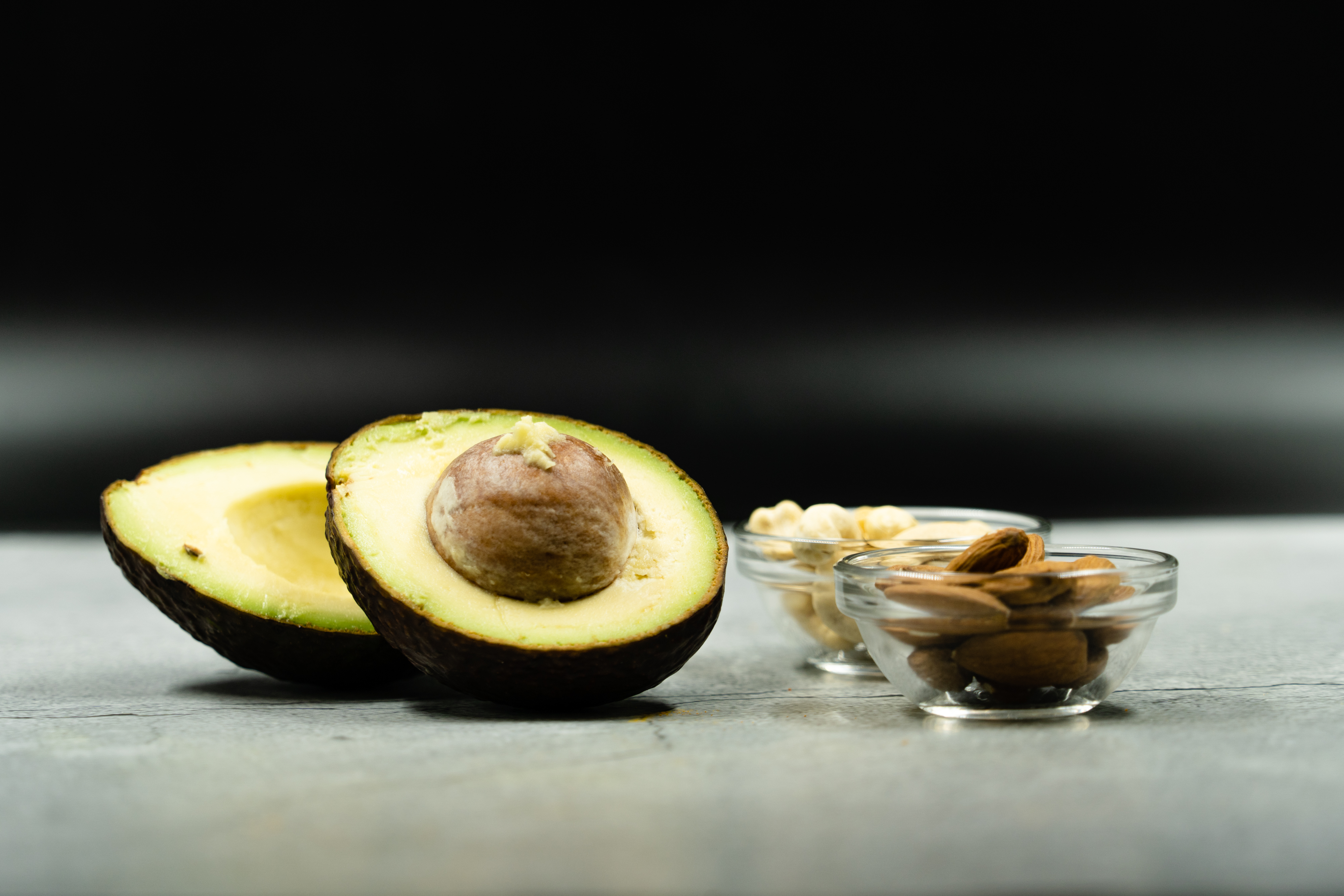
Image: Healthy Fats - Avocado and Nuts - 50191958402 — formulatehealth (CC BY 2.0), via Wikimedia Commons
The brain is approximately 60% fat by dry weight, and the type of fat you consume directly influences neural membrane composition, signal transmission speed, and inflammation. Three food categories consistently stand out in the brain health research:
- Avocado: Rich in monounsaturated fatty acids and lutein — a carotenoid associated in studies with improved spatial memory and processing speed in healthy adults. Avocado also provides folate, which supports neurotransmitter synthesis and homocysteine regulation.
- Walnuts: The only commonly eaten nut with significant alpha-linolenic acid (ALA) content — an omega-3 precursor — alongside polyphenols and vitamin E. Epidemiological data associate regular walnut consumption with better cognitive test performance.
- Fatty fish (salmon, mackerel, sardines): The primary dietary source of preformed DHA (docosahexaenoic acid), which is the dominant structural fatty acid in brain grey matter. DHA supports synaptic membrane fluidity, and low circulating DHA levels are associated with faster cognitive decline in longitudinal studies of middle-aged adults.
A practical weekly target: two to three servings of fatty fish, avocado on most days, and a small handful of walnuts as a snack. None of these are exotic or expensive foods — they're accessible choices with both mechanistic and epidemiological evidence behind them.
Minerals That Support Cognitive Performance
Micronutrients are less headline-grabbing than superfoods, but they underpin fundamental brain functions. A 2026 cross-sectional study examining the relationship between mineral intake and measured cognitive performance in adults found meaningful associations between specific mineral consumption and cognitive outcomes (PMID 41978179).
Minerals of particular importance for brain function include:
- Zinc: Required for hippocampal neurogenesis and synaptic signalling. Found in pumpkin seeds, beef, chickpeas, and cashews. Inadequate zinc intake is more common than recognised, particularly in high-phytate plant-heavy diets.
- Magnesium: A cofactor in over 300 enzymatic reactions; specifically supports NMDA receptor function, which is critical for learning and memory consolidation. Found in dark leafy greens, almonds, dark chocolate, and legumes.
- Iron: Required for oxygen delivery to the brain and synthesis of dopamine and serotonin. Even sub-clinical iron insufficiency — without frank anaemia — can impair sustained attention and memory in adult women.
A varied whole-food diet that includes lean meat or legumes, nuts, seeds, and leafy greens typically meets mineral needs. Routine blanket supplementation without confirmed deficiency is not generally recommended and may interfere with mineral balance — speak with a healthcare provider before adding mineral supplements.
| Brain Food Category | Best Sources | Key Mechanism | Evidence Level |
|---|---|---|---|
| Anthocyanin-rich foods | Blueberries, blackberries, cherries | Antioxidant, cerebral blood flow, synaptic support | Strong — multiple RCTs |
| Omega-3 fatty acids (DHA) | Salmon, mackerel, sardines | Neural membrane structure, anti-inflammatory | Strong — cohort + RCT data |
| Monounsaturated fats + lutein | Avocado, olive oil | Anti-inflammatory, vascular health, lutein | Moderate to strong |
| Polyphenols + vitamin E | Walnuts, almonds, dark chocolate | Oxidative protection, cerebrovascular support | Moderate |
| Key minerals | Pumpkin seeds, legumes, spinach | Zinc, magnesium, iron — enzyme and neurotransmitter support | Moderate — cross-sectional + mechanistic |
Dietary Patterns That Protect Cognitive Health Over Time
Individual brain foods matter, but the research increasingly converges on overall dietary patterns rather than single-food effects. Two patterns have the most evidence supporting cognitive protection:
Mediterranean Diet: Emphasises vegetables, fruits (especially berries and citrus), whole grains, olive oil, fatty fish, nuts, and legumes. Multiple cohort studies associate adherence to this pattern with slower cognitive decline and reduced dementia incidence, and multiple trials have examined cognitive outcomes specifically.
MIND Diet (Mediterranean-DASH Intervention for Neurodegenerative Delay): A hybrid developed specifically around brain health outcomes, it adds extra emphasis on berries and leafy greens while more explicitly restricting red meat, butter, cheese, pastries, and fast food. Long-term observational data on the MIND diet show associations with meaningfully slower rates of cognitive decline.
Neither dietary pattern demands perfection. Research consistently suggests that even moderate adherence — roughly 70–80% of an "ideal" adherence score — captures most of the cognitive benefit. What matters most is the sustained dietary direction over years, not rigid compliance on any given day.
Building a Brain-Healthy Routine You'll Actually Follow
The gap between knowing which foods support brain health and consistently eating them is where most people stall. A few practical frameworks that make adherence realistic:
- The anchor meal approach: Make one meal per day explicitly brain-focused. A morning smoothie with frozen berries, a handful of walnuts, and leafy greens takes under five minutes and delivers multiple brain-protective food categories before noon.
- Colour as a proxy: Dark-coloured fruits and vegetables — purple, red, and dark green — reliably indicate high polyphenol content. Eating something dark at every meal captures many brain-protective nutrients without precise tracking.
- Batch-cook fatty fish weekly: Roasting salmon once or twice a week and working it into several meals across the week removes the friction of daily cooking decisions and ensures consistent DHA intake.
- Replace, don't just restrict: Substituting ultra-processed snacks with a small handful of mixed nuts or a portion of dark chocolate (70%+ cacao) simultaneously reduces pro-inflammatory food intake and increases brain-protective nutrients.
Frequently Asked Questions
How long before brain foods noticeably improve memory and focus?
The timeline depends on the mechanism. Improvements in cerebral blood flow from polyphenols and omega-3s can show measurable effects within weeks in some studies. Structural changes — such as improved synaptic density or neurogenesis — operate on months to years. Cohort studies showing cognitive protection typically follow participants for 5–10 years, suggesting that brain nutrition is a long-term investment rather than a short-term fix. The most realistic expectation for someone starting in their 30s is a lower risk of decline over the following decades, not dramatic short-term enhancement.
Do brain food supplements work as well as whole foods?
In general, no. The 2026 anthocyanin RCT (PMID 41879044) examined both dietary and supplemental sources of anthocyanins — reflecting ongoing scientific interest in whether pill-form nutrients can replicate food effects. Whole food sources deliver nutrients alongside fibre, co-factors, and other phytonutrients that affect absorption and bioavailability in complex ways. Fish oil capsules are a valid option for people who don't eat fish, but DHA from salmon comes packaged with protein, selenium, and B vitamins in ways supplementation doesn't replicate. Supplements are appropriate as targeted gap-fillers, not dietary replacements.
Is it too late to start eating brain foods in your 40s or 50s?
The evidence does not support a "too late" conclusion at any point in adult life. The MIND diet, for example, was primarily developed and validated in populations over 58 years old. Both the dietary diversity systematic review (PMID 40188075) and the anthocyanin RCT include older adult populations, and both demonstrate cognitive benefits from dietary improvements in those age groups. Starting in your 30s gives a longer protective window, but the research consistently shows benefit from dietary improvements at any adult age.
Bottom Line: The evidence for specific brain foods — berries, fatty fish, avocado, walnuts, and leafy greens — is stronger and more consistent than for any individual brain supplement. We recommend treating brain nutrition as a long-term dietary pattern rather than a set of isolated additions: build meals around whole foods, emphasise colour and variety, include fatty fish two to three times per week, and eat a portion of berries daily. These habits are accessible, affordable, and backed by a meaningful and growing body of human research.
Sources & References:
1. Dietary diversity and cognitive performance in older adults: a systematic review. 2025 Apr. PMID 40188075
2. The effect of anthocyanins through diet and supplementation on cognitive function in older adults: a multi-centre randomised controlled clinical trial. 2026 Apr. PMID 41879044
3. Association Between Mineral Intake and Cognitive Performance in Spanish Adults with Overweight and Obesity: A Cross-Sectional Study. 2026 Mar. PMID 41978179
Disclaimer: This article is for informational purposes only and does not constitute medical advice. Always consult a qualified healthcare professional before making health decisions.