
A 2018 review published in Nutrients found that immune function relies on a precisely coordinated network of micronutrients — and that requirements change meaningfully across adult life, meaning the immune-supporting diet that served you in your 30s may leave measurable gaps by your 50s and 60s (Maggini, Pierre & Calder, 2018). The practical takeaway is not alarming: targeted, consistent food choices remain the most effective and sustainable way to close those gaps.
Why Nutrition Is the Foundation of Immune Defense
The immune system is metabolically expensive to run. Producing antibodies, activating lymphocytes, sustaining mucosal barriers, and resolving inflammation all require a constant supply of raw materials. When those materials — specific vitamins, minerals, fatty acids, and amino acids — fall below functional thresholds, the system operates below capacity. The decline is rarely dramatic in a healthy adult, but it is consistent enough to affect how quickly and effectively the body recognizes threats, clears pathogens, and resolves inflammatory responses.
The European Society for Clinical Nutrition and Metabolism (ESPEN) micronutrient guidelines, based on a comprehensive meta-analysis of clinical data, confirmed that suboptimal micronutrient intake is associated with impaired immune cell proliferation, reduced antibody production, and slower tissue repair (Berger et al., 2022). These findings underpin the nutritional recommendations of major clinical bodies worldwide.

Image: A general overview of the main nutritional components modulating both gut microbiota and immune system — García-Montero et al. (CC BY-SA 4.0), via Wikimedia Commons
The Core Micronutrients Your Immune System Needs
Research has identified a specific group of micronutrients with well-characterized, direct roles in immune function. Each operates through distinct mechanisms:
- Vitamin C: Accumulates in phagocytes and lymphocytes, where it supports oxidative killing of pathogens and then reduces oxidative stress to protect the cells themselves. It also stimulates production and function of white blood cells.
- Vitamin D: Functions as a signaling molecule for immune cells. T lymphocytes cannot properly activate without adequate vitamin D receptor signaling. Deficiency is consistently associated with increased susceptibility to respiratory and other infections.
- Zinc: Required for the development and activation of neutrophils, natural killer cells, and both T and B lymphocytes. Even mild, subclinical zinc insufficiency measurably impairs immune response speed and quality.
- Vitamin A: Maintains the integrity of mucosal surfaces — the mucus membranes lining the respiratory tract, gut, and urogenital system — which form the body's first physical barrier against pathogens. It also regulates immune cell differentiation.
- Selenium: An antioxidant cofactor essential for proper resolution of inflammation. Insufficient selenium is associated with prolonged inflammatory responses and impaired viral clearance.
- Iron: Required for lymphocyte proliferation. Both deficiency and excess iron impair immunity through different mechanisms, which is why iron supplementation should be guided by testing rather than assumption.
| Micronutrient | Primary Immune Role | Best Whole-Food Sources |
|---|---|---|
| Vitamin C | Phagocyte function, lymphocyte protection | Bell peppers, kiwi, citrus, broccoli, strawberries |
| Vitamin D | T cell activation, antimicrobial peptide synthesis | Fatty fish, egg yolks, fortified dairy, sunlight |
| Zinc | Lymphocyte development, neutrophil activation | Oysters, beef, pumpkin seeds, legumes, cashews |
| Vitamin A | Mucosal barrier integrity, dendritic cell function | Liver, sweet potato, carrots, leafy dark greens |
| Selenium | Antioxidant defense, inflammation resolution | Brazil nuts (2/day), tuna, sardines, eggs, sunflower seeds |
| Iron | Lymphocyte proliferation, oxygen transport | Red meat, lentils, spinach, tofu, fortified cereals |
The Foods With the Strongest Evidence for Immune Support
Based on the micronutrient evidence above, these are the foods that contribute most broadly and reliably to adult immune function — not because of marketing, but because of the density and bioavailability of what they actually contain:
- Fatty fish (salmon, mackerel, sardines): Deliver vitamin D, selenium, zinc, and omega-3 fatty acids (EPA and DHA). A 2023 review in Applied Physiology, Nutrition, and Metabolism specifically highlighted how dietary fatty acids and micronutrients work together as an integrated system to support immune regulation in healthy adults (Patel et al., 2023). Aim for two to three servings per week.
- Leafy greens (spinach, kale, chard): Rich in vitamins A, C, K, folate, and plant iron. Folate is particularly important for DNA synthesis in rapidly dividing immune cells during an active immune response.
- Legumes (lentils, chickpeas, black beans): Provide plant iron, zinc, B vitamins, and prebiotic fiber. Their fiber feeds beneficial gut bacteria that produce short-chain fatty acids influencing systemic immune tone.
- Eggs: One of the few foods naturally containing vitamin D alongside selenium, zinc, vitamin A, and complete protein — a multi-nutrient immune package in a single ingredient.
- Nuts and seeds: Pumpkin seeds are among the richest plant sources of zinc. Two Brazil nuts per day provides adequate daily selenium without risk of excess. Walnuts contribute omega-3 alpha-linolenic acid.
- Fermented foods (yogurt, kefir, kimchi, sauerkraut): Support the gut microbiome's immune signaling capacity through well-characterized molecular pathways connecting beneficial bacteria to gut-associated lymphoid tissue.
- Colorful vegetables and citrus: Bell peppers contain more vitamin C per gram than most citrus fruits and retain significant content after light cooking. Variety across colors signals diversity in antioxidant and phytonutrient types.
The Gut–Immune Connection Adults Often Overlook
Roughly 70 percent of immune cells reside in or near the gut, making intestinal health a central driver of systemic immune readiness. The microbiome influences immunity through specific, measurable mechanisms: bacteria that ferment dietary fiber produce short-chain fatty acids (SCFAs) — butyrate, propionate, acetate — which directly regulate T cell differentiation and gut barrier integrity. When the barrier is intact, inflammatory signals stay local; when it degrades, they leak into systemic circulation.
The comprehensive 2023 review by Patel and colleagues documented that dietary fatty acids, gut microbiota-derived SCFAs, and select micronutrients operate as an integrated system supporting immune function in healthy adults (Patel et al., 2023). This means prebiotic fiber — from garlic, onions, leeks, oats, asparagus, and legumes — belongs in any serious conversation about immune nutrition, alongside the vitamins and minerals that typically dominate that discussion.
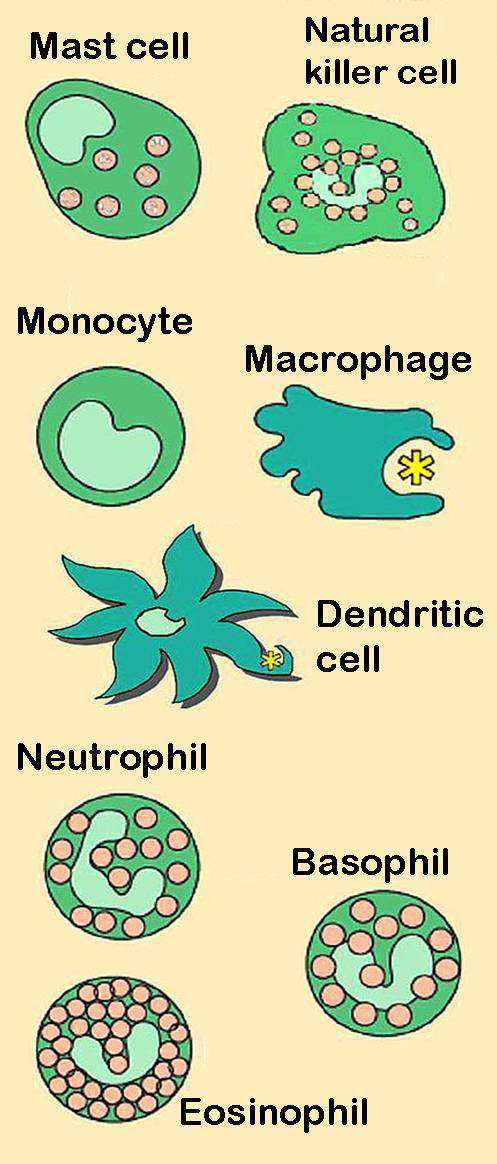
Image: Innate Immune cells — public domain illustration, via Wikimedia Commons
Common Immune Nutrition Mistakes Adults Make
Most immune nutrition failures are not dramatic — they are slow, quiet, and cumulative:
- Relying on vitamin C supplements while ignoring zinc and vitamin D: Supplements can fill single gaps but cannot replicate the bioavailability and cofactor synergy of whole foods. Correcting one deficiency while neglecting others leaves the system partially impaired.
- Under-eating protein: Antibodies are proteins. So are the cytokines that coordinate immune cell communication. Protein deficiency measurably impairs antibody production and cell-mediated immunity, particularly in adults over 60, whose protein requirements increase even as appetite often declines.
- Chronically low dietary fat: Vitamins A, D, E, and K require dietary fat for absorption. Very low-fat diets can reduce circulating levels of all four even when the vitamins themselves appear adequate on paper.
- Ultra-processed food dominance: These foods are typically low in fiber, zinc, selenium, and vitamins A and D — the core immune micronutrients — while promoting a chronic low-grade pro-inflammatory baseline through excess refined carbohydrates and omega-6 fatty acids.
- Ignoring hydration: Lymph — which carries immune cells through the body — is primarily water. Chronic mild dehydration impairs lymphatic circulation and mucosal defenses, the first line of pathogen resistance.
Frequently Asked Questions
Do immune supplements help if my diet is already good?
For most healthy adults eating a varied, nutrient-dense diet, the evidence for routine broad-spectrum supplementation is weak. Supplements are most useful for confirmed deficiencies — most commonly vitamin D (which is difficult to obtain from food alone in northern latitudes or with limited sun exposure) and zinc. High-dose single-nutrient supplementation can actually impair rather than enhance immune function by disrupting micronutrient balance, particularly with iron and selenium.
How quickly does improving my diet affect immune function?
The immune system responds to nutritional changes on multiple timescales. Acute-phase response capacity — such as natural killer cell activity — may measurably improve within days to weeks of correcting a significant deficiency. Restoring adaptive immune capacity, including T cell diversity and antibody quality, takes longer, typically one to three months of consistent dietary improvement before meaningful differences emerge in clinical markers.
Is the gut microbiome really that important for immune health?
The evidence is robust. Animal models raised without any gut bacteria have profoundly impaired immune systems that can be partially restored by introducing specific beneficial bacterial strains. In humans, dietary fiber intake is consistently associated with immune regulatory markers, and disruption of the microbiome through antibiotics, ultra-processed diet, or chronic stress correlates with elevated inflammatory markers. The gut-immune connection is not a theory — it is a well-characterized and extensively studied biological system.
We recommend building meals consistently around fatty fish, leafy greens, legumes, eggs, nuts, seeds, fermented foods, and colorful vegetables to cover the full micronutrient spectrum your immune cells depend on daily. Pay particular attention to vitamin D and zinc — the two gaps most commonly identified in adults eating otherwise reasonable diets. If you suspect a deficiency, a blood panel with your healthcare provider is the most reliable first step before reaching for supplements.
Sources & References:
Maggini S, Pierre A, Calder PC. Immune Function and Micronutrient Requirements Change over the Life Course. Nutrients. 2018;10(10):1531.
Berger MM et al. ESPEN micronutrient guideline. Clin Nutr. 2022;41(6):1357-1424.
Patel D et al. Regulation of immune function in healthy adults. Appl Physiol Nutr Metab. 2023;48(8):554-568.
Disclaimer: This article is for informational purposes only and does not constitute medical advice. Always consult a qualified healthcare professional before making health decisions.