
A 2026 review published on PubMed and titled The importance of nutrition in skin health makes the connection explicit: the foods we eat directly influence skin integrity, moisture retention, and aging rate. Around the same time, a July 2026 study found that weekly egg intake correlated positively with skin carotenoid scores among college students — a measurable, objective signal that what lands on your plate also shows up in your skin's biochemical profile. Yet most people still treat skin health as a purely topical problem, spending far more on serums and creams than on the nutrients that build the skin from within.
The skin is the body's largest organ. It is constantly regenerating, requires a steady supply of specific micronutrients to do so, and is one of the first places to visibly reflect nutritional shortfalls. Understanding which foods and nutrients matter — and why — is the most leverage-efficient thing you can do for long-term skin health.

Image: File:Healthcare professional sharing healthy lifestyle tips while holding a glass of water next to fresh fruits and vegetables.jpg — Shixart1985 (CC BY 2.0), via Wikimedia Commons
Why Nutrition Is the Foundation of Skin Health
The skin's outermost layer — the stratum corneum — is composed largely of lipids (fats) and structural proteins including keratin and collagen. Collagen, the most abundant protein in the body, provides skin with its tensile strength and resilience. Its synthesis depends entirely on adequate vitamin C, along with proline and glycine (amino acids found in protein-rich foods). Without sufficient vitamin C, collagen cross-linking breaks down and the skin loses firmness — a process that accelerates noticeably from the mid-30s onward.
Beyond collagen, the skin faces a constant assault from ultraviolet radiation, air pollutants, and metabolic byproducts called reactive oxygen species (ROS). These free radicals damage cell membranes and DNA, accelerating photo-aging and increasing the risk of chronic skin conditions. Antioxidant nutrients — vitamins C and E, beta-carotene, polyphenols, and selenium — neutralize ROS before they cause lasting damage. A diet rich in these compounds is, in practical terms, an internal SPF layer.
A July 2026 PubMed paper on iron deficiency further illustrates how micronutrient gaps cascade into visible skin changes: iron deficiency was shown to impair ROS-mediated signaling in hair follicle cells, disrupting the Wnt/β-catenin pathway critical for skin and hair renewal. Iron deficiency does not just cause fatigue — it degrades the biological infrastructure that keeps skin and hair growing normally.
Vitamin C: The Collagen Builder
Vitamin C is the rate-limiting cofactor in collagen synthesis. Without it, the hydroxylation of proline and lysine — essential steps in building stable collagen fibers — cannot proceed. The result is structurally weak skin that wrinkles faster and heals more slowly.
High-vitamin C foods include:
- Red and yellow bell peppers — more vitamin C per gram than oranges
- Kiwi fruit — roughly 93 mg per fruit
- Strawberries — rich in both vitamin C and ellagic acid, a polyphenol that inhibits matrix metalloproteinases (enzymes that break down collagen)
- Broccoli and Brussels sprouts — excellent non-fruit sources
- Citrus fruits — the classic source, though far from the most concentrated
Because vitamin C is water-soluble and not stored in large amounts, daily intake from whole foods is the most reliable strategy. Cooking reduces vitamin C content significantly, so incorporating raw or lightly steamed sources is worthwhile.
Omega-3 Fatty Acids: The Moisture Barrier
The skin's barrier function — its ability to retain moisture and block irritants — depends on a healthy lipid bilayer in the stratum corneum. Omega-3 fatty acids, particularly EPA and DHA from marine sources, are incorporated directly into cell membrane phospholipids, maintaining membrane fluidity and barrier integrity.
Diets low in omega-3s are consistently associated with dry, flaky, and inflamed skin. Omega-3s also suppress the production of pro-inflammatory cytokines (such as IL-6 and TNF-alpha) that drive conditions like eczema and psoriasis.
Best food sources:
- Fatty fish — salmon, mackerel, sardines, and anchovies provide preformed EPA and DHA
- Walnuts — the best plant source of ALA, a precursor omega-3
- Flaxseeds and chia seeds — high ALA content, useful for those who don't eat fish
- Algae-based supplements — the original source of EPA and DHA, appropriate for vegans
We recommend aiming for at least two servings of fatty fish per week as a baseline, which aligns with guidance from major cardiac and dermatological health bodies.
Beta-Carotene and Skin Carotenoid Levels
Beta-carotene — the orange pigment in carrots, sweet potatoes, and mangoes — is converted to vitamin A (retinol) in the body. Vitamin A regulates keratinocyte turnover, the process by which old skin cells shed and new ones move to the surface. Inadequate vitamin A leads to rough, dry skin and slowed wound healing.
Carotenoids also accumulate in the skin itself, giving it a measurably warmer, healthier tone detectable by non-invasive optical sensors. The July 2026 PubMed study on MIND diet adherence and skin carotenoid scores in college students found that students with greater weekly egg intake — eggs contain lutein and zeaxanthin, two key carotenoids — had significantly higher skin carotenoid levels, correlating with a healthier skin appearance.
To build skin carotenoid levels:
- Sweet potatoes — one of the most carotenoid-dense whole foods
- Carrots, pumpkin, butternut squash — all high in beta-carotene
- Leafy greens — spinach and kale are rich in lutein and zeaxanthin
- Eggs — particularly the yolk, which concentrates lutein and zeaxanthin
- Mango and papaya — tropical carotenoid sources
Carotenoids are fat-soluble, so pairing these foods with a small amount of healthy fat (olive oil, avocado) improves absorption substantially.
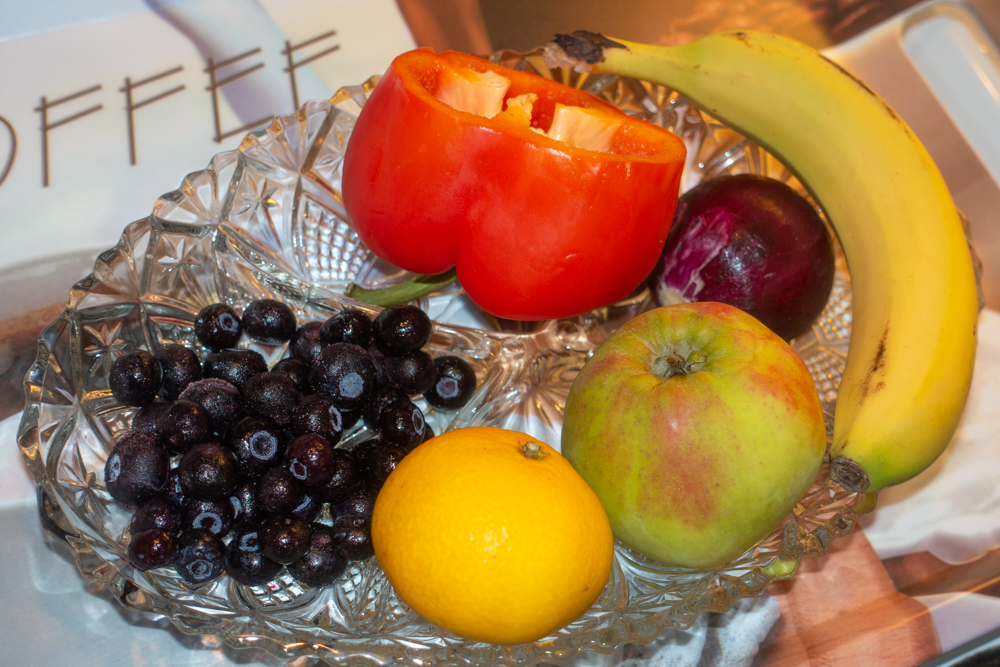
Image: File:Polyphenol.jpg — Frankie F (CC BY-SA 4.0), via Wikimedia Commons
Polyphenols: Anti-Aging at the Cellular Level
Polyphenols are a broad class of plant compounds with potent antioxidant and anti-inflammatory properties. They include flavonoids (in berries, onions, green tea), resveratrol (in red wine and grapes), curcumin (in turmeric), and ellagic acid (in pomegranate and strawberries).
At the skin level, polyphenols inhibit enzymes that degrade collagen and elastin, reduce oxidative stress from UV exposure, and modulate inflammatory signaling that accelerates skin aging. Some polyphenols also activate sirtuins — proteins associated with DNA repair and longevity — at the cellular level.
Practically, this means:
- Blueberries and mixed berries — anthocyanins, among the most potent antioxidant polyphenols
- Green tea — EGCG (epigallocatechin gallate) is the best-studied polyphenol for skin photoprotection
- Dark chocolate (70%+) — flavanols that improve skin blood flow and hydration
- Pomegranate — ellagic acid and punicalagins, both with documented anti-aging properties
- Red onions and purple cabbage — high quercetin content
Zinc and Iron: The Minerals That Maintain Skin Structure
Zinc is required for over 300 enzymatic reactions, including those involved in wound healing and skin cell repair. It also regulates sebaceous gland activity, making it directly relevant to acne-prone skin. Zinc deficiency presents visibly as delayed wound healing, acne-like lesions, and dry, scaling skin.
Iron, as the July 2026 PubMed study on hair loss demonstrated, is essential for skin and hair follicle biology. ROS-mediated disruption of the Wnt/β-catenin signaling pathway — a key regulator of follicle cycling and skin renewal — occurs specifically under iron-deficient conditions. Maintaining adequate iron is therefore not just about energy levels but about preserving skin regenerative capacity.
Food sources:
- Zinc: Oysters (highest food source), pumpkin seeds, hemp seeds, legumes, beef
- Iron (heme): Red meat, liver, shellfish — most bioavailable form
- Iron (non-heme): Legumes, tofu, fortified grains — absorption improved by co-consuming vitamin C
| Nutrient | Skin Function | Best Food Sources | Deficiency Signs |
|---|---|---|---|
| Vitamin C | Collagen synthesis, antioxidant | Bell peppers, kiwi, strawberries | Slow wound healing, rough skin |
| Omega-3 | Moisture barrier, anti-inflammation | Salmon, sardines, walnuts, flaxseed | Dry, flaky, inflamed skin |
| Beta-carotene | Cell turnover, skin tone | Sweet potato, carrots, leafy greens | Rough, dull skin |
| Vitamin E | Antioxidant, UV protection | Almonds, sunflower seeds, avocado | Increased oxidative damage |
| Zinc | Wound healing, sebum control | Oysters, pumpkin seeds, legumes | Slow healing, acne-like lesions |
| Iron | Follicle cycling, skin renewal | Red meat, shellfish, legumes | Hair loss, dull skin |
Frequently Asked Questions
How long does it take to see skin changes from dietary improvements?
Skin turns over on a roughly 28-day cycle in younger adults, slowing to 45–60 days by the mid-40s. Measurable improvements in skin hydration and texture from dietary changes typically take 8–12 weeks to become apparent, though some people notice changes in skin oiliness and tone within 4–6 weeks. Collagen-level changes take longer — improvements in skin firmness from consistent vitamin C and protein intake may take 3–6 months to accumulate visibly.
Are supplements a good substitute for dietary sources of skin nutrients?
Targeted supplementation can help fill genuine deficiencies — for example, omega-3 capsules for those who don't eat fish, or vitamin D for those with limited sun exposure. However, whole foods deliver nutrients in synergistic combinations that isolated supplements cannot fully replicate. Beta-carotene, for instance, is far more safely obtained from food than from high-dose supplements (excessive supplemental beta-carotene has been associated with adverse effects in some studies). We recommend food-first, supplement to address confirmed deficiencies.
What foods are worst for skin health?
High-glycemic foods (refined sugars, white bread, sweetened beverages) spike blood glucose and trigger insulin-mediated increases in IGF-1, a growth factor that promotes sebum production and keratinocyte proliferation — a mechanism directly linked to acne. Ultra-processed foods also tend to be high in omega-6 fatty acids and low in antioxidants, shifting the inflammatory balance in a direction that accelerates skin aging. Alcohol depletes B vitamins and vitamin C, dehydrates the skin, and impairs sleep — all of which negatively impact skin quality.
Bottom Line
The most evidence-supported strategy for long-term skin health is a diet built around nutrient-dense whole foods: fatty fish twice a week, colorful vegetables and fruits at most meals, a handful of nuts or seeds daily, and adequate protein to support collagen synthesis. A 2026 PubMed review titled The importance of nutrition in skin health confirms that this approach addresses the biological foundations of skin aging more reliably than any topical product. We recommend treating dietary quality as the baseline intervention — consistent over months, not days — before layering in targeted supplements for confirmed deficiencies.
Sources & References:
[1] The importance of nutrition in skin health. PubMed PMID 42377356 (2026 Jul 20)
[2] Iron Deficiency-Induced Hair Loss Is Associated with ROS-Mediated Disruption of Wnt/β-Catenin Signaling. PubMed PMID 42514390 (2026 Jul 15)
[3] Moderate MIND diet adherence and positive correlation between weekly egg intake and skin carotenoid scores in college students. PubMed PMID 42537500 (2026 Jul 8)
Disclaimer: This article is for informational purposes only and does not constitute medical advice. Always consult a qualified healthcare professional before making health decisions.